First things first: before you even think about handing over the keys, you need a solid tenancy agreement. This document is the single most important tool for protecting your investment and setting crystal-clear expectations from day one. To get it right, you'll need to gather all landlord and tenant details, define the property specifics, outline the rent amount and due dates, specify the tenancy term, and include all legally required clauses.
Why Your Tenancy Agreement Is Your Most Important Tool

Think of your tenancy agreement as more than just paperwork; it’s the bedrock of a successful landlord-tenant relationship. A clear, legally sound agreement is your primary defence against potential disputes, misunderstandings, and costly legal headaches down the line. It acts as the definitive rulebook for both you and your tenant, outlining rights, responsibilities, and expectations right from the start.
In today's fast-moving rental market, relying on a vague or outdated template you found online is a massive risk. A robust contract provides security by clearly defining every aspect of the tenancy, from rent payment schedules and maintenance duties to the specific rules for shared spaces in an HMO.
The Foundation of a Secure Tenancy
A well-crafted agreement does more than just list rules—it builds a foundation of trust. When tenants know exactly what’s expected of them, the chance of disputes drops dramatically. This proactive approach is essential for keeping things professional and positive for the entire tenancy.
The UK's private rented sector (PRS) is huge, housing around 5.5 million dwellings as of March 2023. With rental prices surging by 6.1% in the year to October 2023, the pressure on landlords has never been greater. For platforms like Rooms For Let, which have been connecting landlords and tenants since 2000, we know that a solid agreement is paramount. It protects everyone involved and contributes to stable tenancies; a fact reflected in data showing 95% of private rented households reported no rent arrears in 2023-24.
Your tenancy agreement isn't just a legal necessity; it's a communication tool. It translates complex legal requirements into practical, everyday rules that stop small issues from blowing up into major conflicts. A properly written document is your best asset for a stress-free tenancy.
Moving Beyond Generic Templates
While templates can be a starting point, they rarely offer the specific protection your property actually needs. A generic document might completely miss:
- Unique property features: Things like garden maintenance, rules for shared facilities in an HMO, or specific parking arrangements.
- Local regulations: Council licensing schemes or other area-specific rules that must be included.
- Your personal requirements: Your specific policies on pets, decorating, or long-term guests.
Customising your agreement makes sure it’s fit for purpose, covering the precise circumstances of your rental. This guide will take you beyond the basics, offering real, actionable advice to help you draft a contract that gives you genuine peace of mind. For more landlord tips and guides, check out the resources on the Rooms For Let blog.
Choosing the Right Agreement for Your Rental
Before you even think about drafting clauses or how you’ll collect the rent, you need to lock down the single most important decision: the legal agreement you’ll use. This isn't a minor detail you can afford to gloss over. Getting it wrong can invalidate key terms, mess up your deposit protection, and make it nearly impossible to regain possession of your property when you need to.
The right agreement hinges entirely on the living situation. For instance, letting a whole flat to a family is on a completely different legal footing than renting out your spare room to a lodger. Nailing this from the very start is your best defence against costly and stressful legal headaches down the line.
The Assured Shorthold Tenancy (AST)
For the vast majority of private tenancies in England, the Assured Shorthold Tenancy (AST) is the default and correct choice. It’s the workhorse of the rental sector. An AST gives the tenant exclusive possession of a property, which means they have the right to treat it as their home and, crucially, to keep others out—including you, the landlord—without permission.
You should be using an AST when:
- The property is the tenant's main or only home.
- You, the landlord, do not live in the same property.
- The annual rent is under £100,000.
An AST provides a clear, robust legal framework for both you and your tenant. It defines everyone's rights and lays out the proper process for ending the tenancy, usually with a Section 21 or Section 8 notice. It’s the backbone of the UK’s private rental sector for good reason.
Lodger Agreements: A Licence to Occupy
But what if you’re not renting out a separate property, but a room inside your own home? This is where many homeowners stumble. In this scenario, you're not a landlord in the traditional sense; you're a resident landlord, and the person living with you is a lodger, not a tenant.
A lodger doesn't have exclusive possession of their room. Instead, they have a Licence to Occupy, which is a far less formal arrangement. This is because they share common areas like the kitchen or bathroom with you. A Licence to Occupy is much simpler and gives you more flexibility. Notice periods are shorter, and the process to ask them to leave is worlds away from the complex eviction process required for an AST. Using an AST for a lodger accidentally gives them rights they aren't legally entitled to, setting you up for major problems.
A classic mistake is downloading a standard tenancy agreement template for a lodger. This simple error can accidentally grant them full tenant rights, making it incredibly difficult to ask them to leave if things don't work out. Always use a specific lodger agreement.
To help clarify which agreement fits your situation, here's a quick comparison.
Agreement Type at a Glance: AST vs. Licence to Occupy
| Feature | Assured Shorthold Tenancy (AST) | Licence to Occupy (Lodger Agreement) |
|---|---|---|
| Who it's for | Tenants renting a separate property/HMO room. | Lodgers renting a room in their landlord's home. |
| Landlord Status | Landlord | Resident Landlord |
| Possession | Tenant has exclusive possession of the property. | Lodger does not have exclusive possession. |
| Deposit Protection | Mandatory in a government-approved scheme. | Not required (but good practice to handle fairly). |
| Ending the Agreement | Formal process using Section 21/Section 8 notices. | Requires 'reasonable notice' (usually the rent period). |
| Legal Framework | Governed by the Housing Act 1988. | Based on common law contract principles. |
As you can see, the distinction is critical. Choosing the right one from the outset defines the entire relationship and protects you from falling into legal traps.
Navigating Agreements for HMOs
Houses in Multiple Occupation (HMOs) add another layer of complexity. You have a strategic choice to make, with two main options on the table, each with its own benefits and drawbacks.
1. A Joint Tenancy (One AST for the whole house)
- How it works: All the tenants sign a single AST, making them collectively responsible for the entire property and the total rent. This is a popular model for groups of students or friends who are moving in together.
- Pros: It definitely simplifies rent collection—you get one lump sum. If one tenant packs up and leaves, the others are still legally on the hook for the full amount, which protects your income.
- Cons: It can be unstable. If one person wants to leave, it can potentially terminate the tenancy for everyone unless a replacement is found and a whole new agreement is signed.
2. Individual Room Agreements (Separate ASTs for each room)
- How it works: Each tenant signs their own AST for their specific room, which also grants them rights to use the shared facilities like the kitchen and bathroom. This is the go-to method for professional HMOs where tenants are strangers.
- Pros: This offers far greater flexibility and security for both you and the tenants. When one person moves out, it doesn’t disrupt the others, making it much easier to manage tenant churn and keep your rooms filled. Landlords who advertise on platforms like Rooms For Let often find this model is the most effective way to find individual tenants quickly.
- Cons: The admin is on you. You're responsible for filling each empty room and managing multiple agreements. You also carry the financial risk of void periods if a room sits empty for a while.
Crafting the Essential Clauses for Your Agreement

Once you've settled on the right type of tenancy, it's time to build the core of the agreement itself. This is where you lay down the non-negotiable details that form the legal backbone of the tenancy. Getting these fundamental clauses right isn't just about ticking boxes; it's about creating a clear, unambiguous document that heads off disputes before they even have a chance to start.
Think of these clauses as the foundations of a house. Get them wrong, and everything else you build on top will be unstable. Let's break down each component, so you can draft an agreement that's both robust and legally sound.
Identifying the Parties and the Property
First things first, you need to clearly state who and what is involved. It might sound blindingly obvious, but simple mistakes here can cause major headaches down the line, especially if you ever need to take legal action.
Your agreement must state the full legal names of everyone involved. That means you (the landlord) or your letting agency, and every single adult who will be living in the property. No nicknames or shortened names – use what's on their passport or driving licence.
Next up is the property itself. Be precise. Include the full postal address, right down to the postcode. If you're letting a room in an HMO, you need to be even more specific. Detail the room number or name (e.g., "Room 3, 123 Apple Tree Lane") and spell out which common areas the tenant has a right to use, such as the kitchen, bathroom, and living room.
Defining the Tenancy Term and Rent
Clarity on the tenancy's duration and the money side of things is absolutely essential. This part of the agreement sets firm expectations and is probably the section you'll both refer back to the most.
Start by specifying the tenancy term. For a standard fixed-term let, state the exact start and end dates. For instance, "a fixed term of 12 months beginning on 1st September 2024 and ending on 31st August 2025." If you're setting up a contractual periodic tenancy from day one (which is less common), make sure that's stated clearly.
Then, nail down the details on the rent. This clause must cover:
- The total rent amount: State the figure clearly, whether it's weekly or monthly (e.g., "£850 per calendar month").
- The payment date: Specify exactly when the rent is due, such as "on the 1st day of each month."
- The payment method: Outline how you want to be paid. A standing order to a specified UK bank account is the typical choice for a reason – it’s reliable.
With 20.3% of households in England and Wales now in the private rented sector and rental growth hitting 6.0% in England by October 2023, a rock-solid agreement has never been more important. It protects you and your tenant from ambiguity and potential fallouts.
The Critical Deposit Protection Clause
How you handle the tenancy deposit is one of the most heavily regulated parts of being a landlord in the UK. Your tenancy agreement must have a clause that spells out how the deposit will be managed, and it must comply with the law. This is a common tripwire for many landlords.
Your clause must confirm the exact deposit amount. Remember, for most tenancies in England, the deposit is legally capped at five weeks' rent if the annual rent is under £50,000.
Crucially, the agreement must name which of the three government-approved schemes you're using: the Deposit Protection Service (DPS), MyDeposits, or the Tenancy Deposit Scheme (TDS). Forgetting to name the specific scheme in the contract is a classic mistake that can land you in hot water.
When writing your agreement, make sure you include detailed clauses for security deposit protection, explaining how it will be handled and the process for its return. It's also wise for the clause to briefly mention the conditions for potential deductions, like unpaid rent or damage that goes beyond fair wear and tear.
For example, you could word it like this:
"The Tenant has paid a deposit of £980. The Landlord will protect this deposit with the Deposit Protection Service (DPS) within 30 days of receipt. The Landlord will provide the Tenant with the Prescribed Information relating to this deposit as required by law."
This simple, clear wording ticks all the legal boxes and gives the tenant the necessary information upfront. It’s a great way to build trust and ensure you’re compliant from the get-go.
Customising Your Agreement for Better Protection
A standard, off-the-shelf tenancy agreement is a decent starting point, but let's be honest—it’s rarely enough. To build a contract that gives you proper, real-world protection, you need to add clauses tailored specifically to your property and how you expect it to be treated. Think of these custom clauses as your best tool for preventing misunderstandings before they even begin.
Going beyond the basics shows you’re a professional who has thought through the practicalities of a tenancy. It tackles common friction points head-on—things like pets, redecorating, or who’s responsible for the garden—turning potential arguments into simple, agreed-upon rules. This level of detail gives your tenants clarity and puts a solid layer of protection around your investment.
Defining Repair and Maintenance Obligations
One of the most common sources of landlord-tenant disputes is confusion over who fixes what. While the law sets out the big responsibilities, your agreement is the place to drill down into the specifics and eliminate any guesswork. Getting this right is crucial for keeping the property in good nick and maintaining a positive relationship with your tenants.
Start by clearly stating your legal duties, like repairs to the structure, exterior, and essential services (heating, water, etc.). Then, add clauses that outline the tenant's role in day-to-day upkeep.
This could cover responsibilities such as:
- Minor Fixes: Be explicit that tenants are expected to handle small jobs like changing lightbulbs or replacing smoke alarm batteries.
- Garden Maintenance: If there’s a garden, don’t just say "maintain the garden"—that’s far too vague. Specify the actual tasks, like "regularly mowing the lawn, weeding flowerbeds, and keeping pathways clear."
- Reporting Issues: It's vital to include a clause requiring tenants to report serious repair needs promptly. This simple rule can save your property from further damage caused by an unreported leak or electrical fault.
Setting these expectations in writing isn't about shifting your responsibilities. It’s about creating a partnership in looking after the property. When everyone knows their role, problems get sorted faster, and your asset stays in top condition.
Setting Rules for Shared Spaces in HMOs
For a House in Multiple Occupation (HMO), a generic tenancy agreement just won't do the job. The very nature of shared living demands a clear set of house rules that are written directly into each person's tenancy agreement. This ensures every single tenant is bound by the same standards, which is essential for keeping the peace.
Think about the usual flashpoints in a shared house and tackle them from the outset.
Your HMO-specific clauses should cover things like:
- Cleaning Rotas: Specify your expectations for the cleanliness of communal areas like the kitchen, bathrooms, and living room. You could even attach a cleaning rota as a schedule to the agreement itself.
- Personal Belongings: Prohibit tenants from leaving personal items like shoes, bikes, or washing in hallways and shared spaces. This isn't just about avoiding clutter; it's a critical fire safety issue.
- Noise and Guests: Outline a 'quiet hours' policy, perhaps from 11 pm to 7 am. It’s also wise to set reasonable rules for overnight guests, like limiting how many consecutive nights they can stay to prevent an unofficial tenant moving in.
By putting these rules in the contract, you create a clear framework for how the house should run. It also gives you a proper contractual basis to step in if one tenant's behaviour starts causing problems for everyone else.
Crafting a Fair Pet Policy
With more people renting long-term, the demand for pet-friendly properties is soaring. A blanket "no pets" policy can seriously shrink your pool of potential tenants. On the other hand, allowing pets without any rules is a huge risk. The best solution is a carefully worded, conditional pet clause.
A good pet clause isn't a simple 'yes' or 'no'. It's a conditional agreement that allows a pet while still protecting your property. For example, you could state that your consent for a pet is granted only if the tenant agrees to certain terms.
Consider including these points:
- Written Permission: Require the tenant to get your written consent for a specific pet before it moves in. This avoids any surprises.
- Professional Cleaning: Insist that at the end of the tenancy, the tenant must pay to have all carpets professionally cleaned and the property fumigated to deal with any potential fleas or odours.
- Damage Responsibility: Make it crystal clear that the tenant is 100% liable for repairing any damage the pet causes, from scratched doors and skirting boards to a dug-up garden.
This approach lets you be flexible enough to attract responsible pet owners while making sure your asset is properly protected. It turns a potential headache into a manageable and positive arrangement for everyone.
Clarifying Alterations and Redecorating
Most tenants want to make a place feel like their own, which often leads to requests to paint a wall or put up shelves. Your tenancy agreement needs a clear clause to manage these requests, protecting your property from unauthorised or badly-done changes.
A complete ban on alterations can feel overly restrictive and put good tenants off. A much more practical approach is to state that no alterations or redecorating are allowed without the landlord's prior written consent. This simple requirement keeps you in control.
Your clause can specify that any requests must be submitted in writing and that your approval, if given, might come with conditions. For example, you might agree to them painting a room, but only on the condition they use a neutral colour or agree to paint it back to the original colour before they move out. This prevents nasty surprises at the end of the tenancy and ensures you have the final say on your property's condition and appearance.
Finalizing Your Agreement and Staying Compliant
You’ve drafted your tenancy agreement, and you’re nearly there. But the final steps are about more than just getting a signature on paper. This is the crucial compliance stage that turns your draft into a legally binding contract and protects you from hefty fines down the line.
Getting these last few details right isn’t just ticking boxes; it sets the tone for a professional, legally sound tenancy from the very first day. This is what gives both you and your new tenant genuine peace of mind.
The Pre-Tenancy Compliance Checklist
Before you even think about handing over the keys, there are several legal duties you absolutely must complete. If you skip any of these, you could face serious consequences – not least, finding that a Section 21 notice is invalid if you ever need to regain possession of your property.
Think of this as your essential pre-let checklist:
- Right to Rent Checks: It’s your legal responsibility to check that every adult tenant has the right to rent in the UK. This means physically inspecting their original documents, like a passport or biometric residence permit, or using a certified digital identity service. There are no shortcuts here.
- Provide Key Safety Documents: You are required to give your tenant a valid Gas Safety Certificate before they move in. You must also provide an Energy Performance Certificate (EPC) with a minimum rating of E.
- The 'How to Rent' Guide: At the start of the tenancy, you must also provide the most up-to-date version of the government's official "How to Rent: The checklist for renting in England" guide.
Failing to provide these documents isn't a minor slip-up. It's a breach of your legal duties that can result in significant penalties and seriously undermine your ability to manage the tenancy. Make it a non-negotiable part of your tenant onboarding process.
The infographic below shows how you can adapt your agreement with custom clauses for common scenarios like maintenance, pets, and smoking rules.
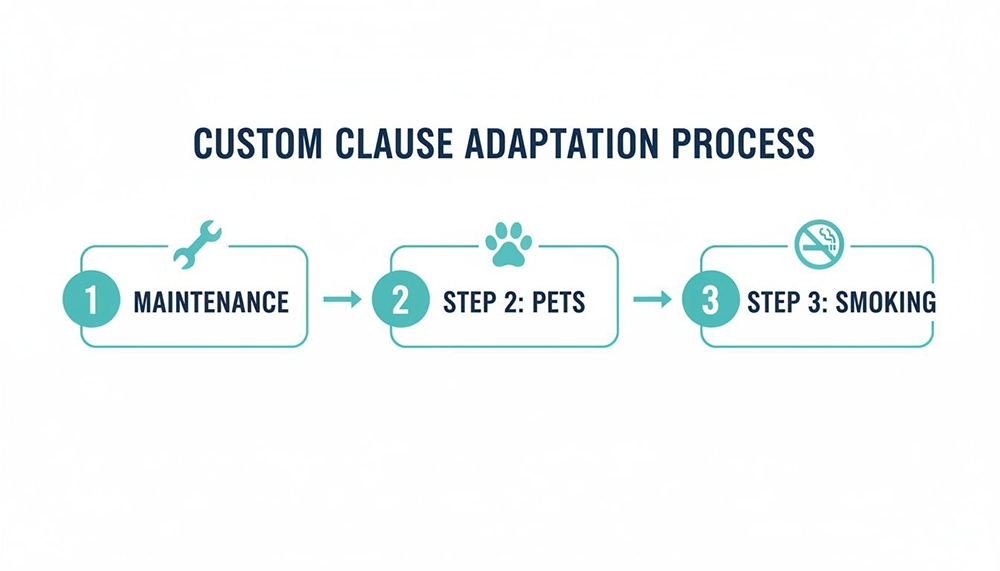
The process clearly shows how to go from identifying a need to implementing a specific, tailored rule in your agreement.
Signing the Agreement and Protecting the Deposit
The signing ceremony is what makes the contract official. Whether you use traditional 'wet ink' signatures or a modern electronic signature service, both are legally valid in the UK. Just pick the method that works for you and your tenant.
The key thing is to ensure every adult living in the property signs and dates the document, along with the landlord or their agent. Once it’s all signed, make sure everyone gets a complete copy for their records.
After the first month's rent and deposit have been paid, the clock starts ticking on your next big job. You have exactly 30 days from the day you receive the deposit to protect it in one of the three government-approved schemes. You must also serve the tenant with the Prescribed Information, which explains where their money is being held and how the scheme works.
Finally, remember that the rental landscape is constantly changing. It’s vital to keep up with new legislation. A great resource for this is the Renters Reform Bill 2025 guide, as upcoming changes will have a big impact on how you manage your tenancies. Staying informed ensures your agreements remain compliant and enforceable for years to come.
Have a Question About Your Tenancy Agreement?
Even with the most watertight agreement, you'll still run into situations that make you pause. Tenancy law can be a bit of a minefield, so it’s always helpful to have quick, clear answers ready for those common queries that almost every landlord faces.
Think of this as your go-to reference for those tricky "what if" scenarios. We'll give you practical, no-nonsense answers to help you handle things confidently and, most importantly, legally.
Can I Increase the Rent During a Tenancy?
Yes, but it has to be done by the book. You can't just decide to hike the rent on a whim mid-tenancy; that's a surefire way to end up in a dispute or even a tribunal.
How you can do it depends on your situation:
- Rent Review Clause: The easiest route. If your tenancy agreement already has a rent review clause, you simply follow the process laid out in it.
- Mutual Agreement: You and your tenant can always just agree on a new rent. If you go down this path, it's absolutely vital to get the new amount in writing, signed by both of you, as an addendum to the original contract.
- Section 13 Notice: This is your tool for periodic tenancies (i.e., when the initial fixed term has ended). You can serve a Section 13 notice to formally propose the increase, giving at least one month's notice for a typical monthly tenancy.
With the UK's private rented sector now making up a huge 19% of all households (as of March 2024) and rents jumping by 6.1% in the year to October 2023, knowing how to manage this correctly is more important than ever. Landlords on platforms like Rooms For Let often benefit from having clear review dates specified in their agreements from the start, which makes the whole process much smoother. You can dig into the official numbers on private housing rental prices data yourself.
What Happens if a Tenant Wants to Leave Early?
If a tenant wants to bail on a fixed-term tenancy before it's up, they don’t have an automatic right to do so. Legally, they're on the hook for the rent until the contract ends.
In the real world, though, you have a few ways to handle it:
- Enforce the Contract: You can hold them to the agreement and insist they keep paying rent until the term expires. This can be confrontational, but it's within your rights.
- Negotiate a Surrender: You can both mutually agree to end the tenancy early. This often involves the tenant agreeing to cover your costs for finding a new tenant and any rent you lose while the property is empty.
- Use a Break Clause: If your agreement has a break clause, the tenant can give notice to leave early, provided they follow the exact conditions—like giving two months' notice after the first six months, for example.
From experience, the most practical solution is usually negotiation. Forcing a tenant to stay when they want to leave can lead to a miserable experience for everyone. Finding a fair compromise often works out better in the long run.
Can I Prohibit Guests from Staying Over?
You can set reasonable rules, but an outright ban on guests is a no-go. Tenants have a legal right to the "quiet enjoyment" of their home, and that includes having friends or family over to stay. Any clause in your agreement that forbids all overnight guests would almost certainly be deemed an unfair term and be unenforceable.
The smarter approach, especially in an HMO, is to set sensible limits. For instance, you could include a clause that a guest can't stay for more than, say, 14 consecutive nights or for a certain number of nights in any given month. This is a fair way to prevent a guest from effectively becoming an unauthorised lodger without trampling on your tenant's rights.
If you're wrestling with specific clauses or need advice tailored to your property, it's always worth getting a second opinion. You can get in touch with our team for support and clarity on any of these tricky tenancy issues.
At Rooms For Let, we've been helping landlords and tenants connect since 2000. Advertise your spare room or HMO for free and find your next great tenant quickly and efficiently on https://www.roomsforlet.co.uk.