Thinking about how to rent a room in my house? You're not alone. It's a savvy move many UK homeowners are making to bring in some extra cash – often enough to take a real chunk out of the mortgage payments. By becoming a live-in landlord, you can turn an unused space into a proper asset.
Weighing the Pros and Cons of Renting a Room
Deciding to rent out a room is a big lifestyle and financial choice. It goes way beyond just making a bit of extra money; you're sharing your personal space with someone new. Let's be honest, the idea of having a stranger in your home can feel a bit daunting, but the financial rewards can be huge. For many, it's the key to easing the pressure of rising living costs.

The Financial Upside
The most obvious reason to welcome a lodger is the financial boost. In the UK, this side hustle has become a go-to for homeowners looking to fight back against soaring living costs. With average room rents hitting a record £753 per month, that extra income could cover 20-30% of your mortgage payments. It’s a significant help, especially as private rents have shot up by 9.0% across the UK.
Platforms like Rooms For Let, which has been around since 2000, show there’s a steady demand from students and professionals looking for affordable shared living.
The UK government also offers a fantastic incentive with the Rent a Room Scheme. This lets you earn up to £7,500 per tax year completely tax-free from letting out a furnished room in your home. That's not a small amount; for many, it means every penny from their lodger is pure, tax-free profit.
So, to recap the financial perks:
- Substantial Income: A reliable monthly rent payment can completely change your household budget.
- Tax-Free Earnings: The Rent a Room Scheme offers a very generous tax-free allowance.
- Mortgage Support: That extra cash makes mortgage repayments far more manageable.
- Shared Bills: You can often factor a portion of utility bills into the rent, cutting your own outgoings.
The Personal and Practical Downsides
While the financial picture looks rosy, the day-to-day reality needs some serious thought. Sharing your home means giving up a degree of privacy. Your quiet morning coffee might now involve navigating a shared kitchen, and the living room is no longer just for you.
Living with a lodger means you are no longer just a homeowner; you are also a landlord. This brings new responsibilities, from ensuring the property is safe to being on hand to deal with minor issues.
It's vital to be realistic about this trade-off. You'll need to set clear boundaries and house rules from the very beginning to make sure things run smoothly. Remember, potential lodgers are also looking for a good fit, and you can get a sense of what they’re after by checking out our Rooms Wanted section.
Be sure to consider these potential challenges:
- Loss of Privacy: You’ll be sharing common areas like the kitchen, bathroom, and living room.
- Increased Responsibility: You are now responsible for safety checks and maintenance.
- Potential for Conflict: Different lifestyles or habits can cause friction if you don't manage them well.
- Wear and Tear: An extra person in the house will inevitably mean more use of appliances and furniture.
Getting Your Home and Paperwork Lodger-Ready
Before you even think about writing an advert to rent out a room, you’ve got to get your house in order. This isn't just about making the space look nice; it’s about ticking the legal boxes and protecting yourself from headaches down the line. A little prep work now saves a world of trouble later.
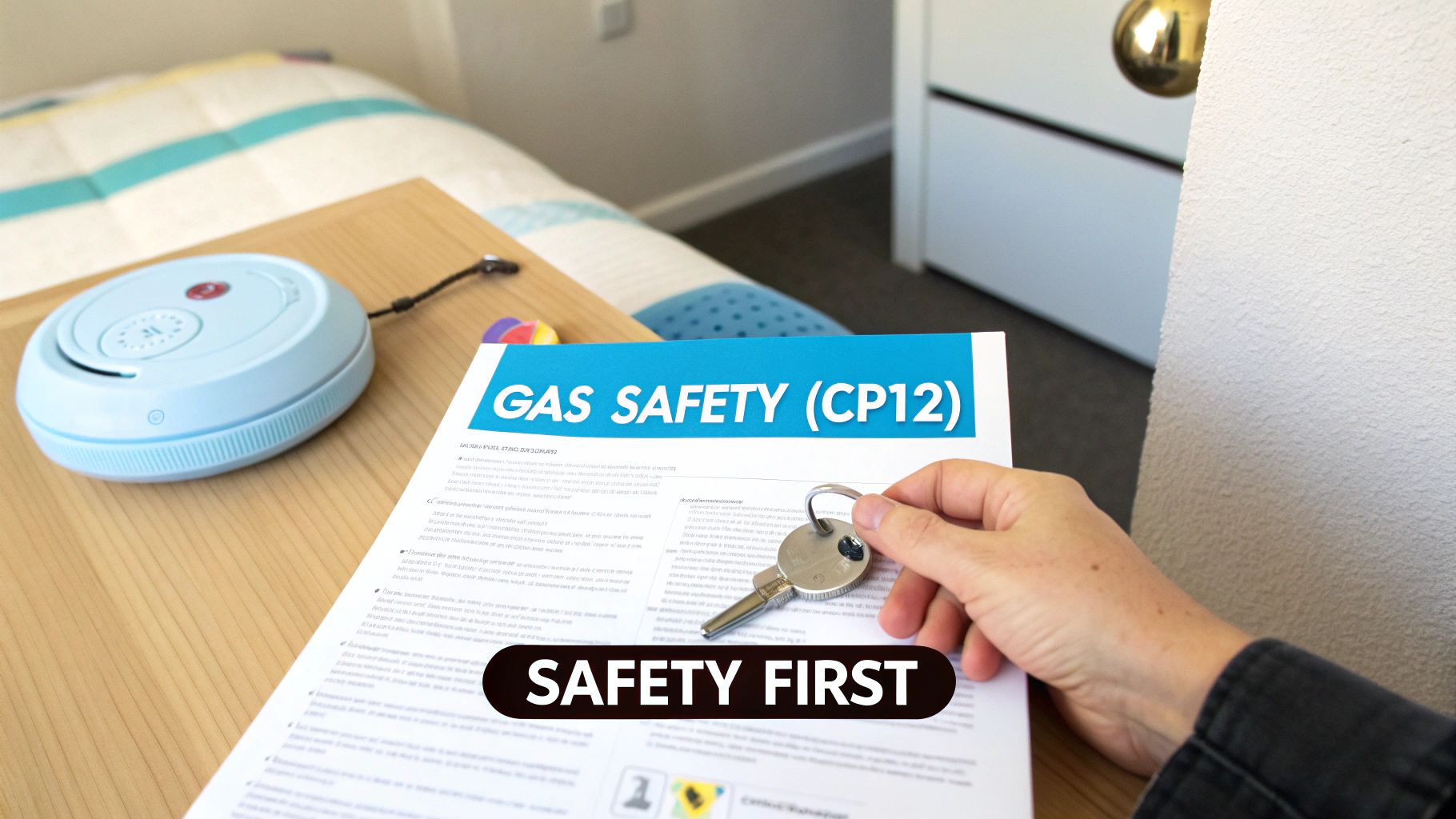
Think of this stage as laying the foundations. It’s a mix of practical jobs and essential paperwork, all designed to create a safe, welcoming, and legally sound environment for your future lodger. Get this right, and you're already building trust and setting the tone for a great living arrangement.
Essential Safety and Legal Checks
Your absolute top priority is safety. As a live-in landlord, you have a duty of care to your lodger, and these checks are completely non-negotiable. Falling short can have serious consequences.
Let's start with fire safety. You are legally required to have at least one smoke alarm on every floor of your home that’s used as living accommodation. On top of that, you must fit a carbon monoxide alarm in any room with a solid fuel-burning appliance, like a log burner or coal fire.
Next up are two vital certificates:
- Gas Safety Certificate (CP12): If you have any gas appliances—a boiler, hob, or fire—they must be checked every year by a Gas Safe registered engineer. Your lodger needs a copy of this certificate before they even move in.
- Electrical Installation Condition Report (EICR): While it's not always a strict legal must-have for lodgers in the same way it is for tenants, ensuring your electrics are safe is just fundamental. An EICR from a qualified electrician gives you peace of mind that all the wiring and sockets are sound.
By sorting these safety checks upfront, you're doing more than just ticking a legal box. You’re showing potential lodgers that you’re a responsible, trustworthy landlord—and in a crowded market, that’s a massive selling point.
Notifying Key Third Parties
Here’s a step people often miss: telling your mortgage lender and your insurer. It’s easy to assume that since it’s your home, you can do as you please, but that can turn into a very costly mistake.
Most mortgage agreements contain a clause requiring you to get their permission before letting out any part of your property. Taking in a lodger without their say-so could put you in breach of your mortgage terms, a situation you definitely want to steer clear of. Usually, a quick phone call is all it takes to get the green light.
It’s just as important to check how a lodger might affect your home insurance policy. Some providers need to be told, and you might need a specific type of cover. If you don't inform them, you risk invalidating your policy, which means they could refuse to pay out if you ever need to claim for damage or theft.
Preparing the Room and Shared Spaces
Once the serious paperwork is sorted, you can turn your attention to the room itself. Remember, you're not just renting out four walls; you're offering someone a place to live. A clean, well-presented room will naturally attract better applicants and justify a higher rent.
Here’s a quick rundown of what to focus on:
- A Fresh Lick of Paint: A neutral coat of paint can make a room feel brighter and bigger in an instant. Now’s the time to fix any little niggles, like that dripping tap or a sticky drawer.
- Furnishings: The room really should be furnished. A comfy bed is a must, along with essentials like a wardrobe, a chest of drawers, and maybe a small desk and chair if you have the space.
- Storage Space: Not having enough storage is a classic complaint. Make sure your lodger will have plenty of room for their belongings, both in their own room and perhaps in shared areas like the kitchen or hallway.
- The Deep Clean: Before you even think about taking photos for your advert, give the room and all the shared spaces a proper deep clean. First impressions count for everything.
To help you keep track of everything, here’s a straightforward checklist summarising the key steps.
Your Lodger-Ready Checklist
| Category | Task | Why It Matters |
|---|---|---|
| Safety | Install/Test Smoke Alarms | Legal requirement. One per storey is the minimum. |
| Safety | Install/Test Carbon Monoxide Alarms | Mandatory for rooms with solid fuel appliances. |
| Legal | Obtain a Gas Safety Certificate (CP12) | A legal necessity if you have gas appliances. Must be renewed annually. |
| Legal | Consider an EICR | Best practice for electrical safety and shows duty of care. |
| Financial | Notify Your Mortgage Lender | Prevents breaching your mortgage terms. |
| Financial | Inform Your Home Insurer | Ensures your policy remains valid and you're fully covered. |
| Practical | Decorate and Carry Out Repairs | Makes the room more attractive and justifies the rent. |
| Practical | Furnish the Room | Most lodgers expect a furnished space with essentials provided. |
| Practical | Deep Clean the Room and Shared Areas | First impressions are critical for attracting good applicants. |
Working through this list methodically ensures you haven’t missed anything important. Once these tasks are complete, you can move forward with confidence, knowing you’re fully prepared to find the right person for your spare room.
Pricing Your Room and Crafting a Standout Advert
Once you’ve got the legal side sorted and the room is looking its best, it’s time to tackle the next big step: setting the rent and creating an advert that pulls in the right kind of lodger.
Getting the price right is a bit of an art. Go too high, and you’ll be met with silence. Too low, and you're leaving cash on the table. The goal is to find that sweet spot that maximises your income while still attracting a solid pool of applicants.

This isn't about plucking a number from thin air. It involves a bit of detective work into your local market and being crystal clear about what your rental package actually includes. A well-crafted advert will then do most of the heavy lifting for you, filtering out unsuitable people before they even get in touch.
How to Set the Right Rent Price
First things first, you need to become an expert on your local rental scene. Spend a bit of time browsing listings on platforms like Rooms For Let, focusing on your specific town or even just your postcode. Don't just glance at the headline prices—dig into the details. A room in Manchester city centre is going to command a very different price to one in a quiet suburb of Margate, so getting hyper-local with your research is essential.
As you look around, keep an eye on the key factors that affect the price:
- Room Size and Features: Is it a big double with its own en-suite, or a smaller single with a shared bathroom? Does it have a desk for someone working from home? These details really matter.
- Property Type and Location: A modern flat with a balcony will be priced differently from a room in a classic Victorian terrace. Being close to a train station, shops, or a nice park adds real value.
- Bills Included: The easiest and most common approach is to offer an all-inclusive rent. This typically covers council tax, gas, electricity, water, and Wi-Fi, and that simplicity is a huge selling point for most lodgers.
Be honest about what you're offering. If your property is a bit dated but in a fantastic location, price it to reflect that. Transparency builds trust right from the start and helps you attract people who value what you have.
Make sure you define exactly what the rent covers. Arguments over bills are a classic source of friction, so a clear, all-inclusive price is often the best way to go when you want to rent a room in my house. It's just simpler for everyone involved.
Creating an Advert That Stands Out
With your price locked in, it's time to write an advert that actually gets noticed. Your listing is your shop window, and a little bit of effort here will pay off massively. The goal is to help potential lodgers picture themselves living happily in your home.
Start with a headline that does more than the bare minimum. Instead of a flat "Double Room for Rent," try something more descriptive, like "Bright Double Room in Quiet Leafy Suburb, 10 Mins to Station." It immediately provides key info and paints a much better picture. If you need some inspiration, you can learn more about our advertising packages and tips.
Photography and Description That Sells
Good photos are completely non-negotiable. You don't need a fancy camera—your smartphone will do the job perfectly well—but you absolutely need good lighting and a tidy space. Open the curtains, switch on the lights, and clear every surface before you start snapping pictures.
Get shots of the bedroom from a few different angles, and don't forget to include photos of the shared spaces they'll be using, like the kitchen, bathroom, and living room.
Your description should be warm, informative, and above all, honest. A simple structure that always works well is:
- The Room: Describe what makes it great—the comfy double bed, the large window that looks out onto the garden, the handy built-in wardrobe.
- The Home: Talk about the shared areas. Mention the fast fibre broadband, the well-equipped kitchen, or the sunny patio that’s perfect for summer evenings.
- The Vibe and House Rules: This is your chance to set expectations. Are you a quiet household or a bit more sociable? It’s wise to mention key rules upfront, like your policy on overnight guests, smoking, or how cleaning is handled. Being direct saves everyone time.
- The Area: Sell the neighbourhood! Talk about the great local pub, the nearby park that's great for a run, or the super-convenient bus route into town.
By putting together a detailed and appealing advert, you’re not just selling a room; you’re showcasing a home and a lifestyle. This thoughtful approach will attract applicants who are looking for more than just a place to sleep—they’re looking for somewhere they will genuinely fit in.
Screening Applicants to Find a Great Lodger
Your advert is live, the enquiries are rolling in, and now we get to what is probably the most important part of the entire process: finding the right person to share your home with. When you rent a room in your house, you're not just finding a tenant; you're choosing a housemate. A solid screening process is your best defence against future headaches, making sure you find someone you can happily live alongside.
This stage is a blend of legal duties and good old-fashioned gut feeling. You need to be methodical, ask the right questions, and ultimately, trust your instincts. Skipping steps here is a recipe for trouble, from missed rent payments to those awkward lifestyle clashes that can make your own home feel uncomfortable.
Managing Enquiries and Creating a Shortlist
The initial wave of messages can feel a bit much. To get a handle on it, create a simple system. Honestly, a basic spreadsheet to track names, contact details, and a few notes can work wonders. As messages land in your inbox, keep an eye out for people who have clearly read your advert properly and taken the time to write a thoughtful message.
Fire off a brief reply to everyone who seems like a potential fit, maybe asking a couple of pre-screening questions before you even think about scheduling a viewing. It's a simple step, but it filters out the less serious applicants and will save you a huge amount of time.
The Mandatory Right to Rent Checks
Before you go any further, you absolutely must get to grips with your legal duties. In the UK, every landlord—and that includes live-in landlords—has to check that any adult lodger has the legal right to rent here. Get this wrong, and you could be looking at a significant fine. It's a step you simply cannot afford to miss.
You have to check this for all potential lodgers, not just those you think might not be British citizens. Here’s the drill:
- Check Original Documents: You must see the original documents in person, with the applicant standing right there with you. Photocopies or scans won't cut it for a manual check.
- Verify Authenticity: You need to be satisfied the documents are genuine and belong to the person in front of you. Check photos, dates of birth, and look for any obvious signs of tampering.
- Keep Records: Make copies of the documents and keep them somewhere safe for the entire time the lodger stays with you, plus for one year after they leave. Make a note of the date you did the check.
The documents you can accept are laid out on different lists provided by the government. A UK passport is usually enough on its own. For others, it might be a combination of documents, like a birth certificate and a driving licence.
Conducting Right to Rent checks isn't just a box-ticking exercise; it's a fundamental part of being a responsible landlord. It sets a professional tone from day one and protects you from serious legal trouble.
Asking the Right Questions During Viewings
The viewing is your chance to see if you’ll actually get along—something you can't tell from an application form. It’s a tough market out there, with many priced-out renters looking for alternatives to the average £1,369 monthly private rent in England. With rental homes up 9% year on year but still 33% below the levels we saw before 2015, screening effectively is key to finding a reliable lodger. You can dig into more of these trends over at the Office for National Statistics.
Jot down a list of open-ended questions beforehand that encourage a proper conversation. You’re trying to understand their lifestyle and what they expect.
- "What's your typical weekly routine like? Are you an early bird or more of a night owl?"
- "How do you usually spend your weekends?"
- "What are your thoughts on cleaning in shared spaces like the kitchen and bathroom?"
- "Do you tend to have friends over often?"
These questions aren't about being nosy. They're about figuring out if your lifestyles will mesh or clash horribly. If you work from home and need peace and quiet during the day, someone who works night shifts and enjoys blasting music in the afternoon probably isn't going to be the best fit.
Checking References the Smart Way
Once you’ve got a favourite candidate in mind, checking their references is the final piece of the puzzle. Always ask for at least two: one from a previous landlord and another from their employer.
When you get a previous landlord on the phone, ask specific questions:
- Did they always pay their rent on time?
- Did they keep the property in good condition?
- Were there ever any issues with neighbours or other housemates?
- Crucially: would you happily rent to them again?
An employer reference simply confirms their job and income, giving you that extra confidence they can comfortably afford the rent. This thorough approach helps you make a well-informed choice, setting the stage for a positive and stress-free living arrangement for everyone.
You’ve found the right person, which is fantastic news. Now it’s time to make things official. This isn’t about being cold or corporate; it’s about putting clear, mutual expectations in writing to protect both of you. Getting the paperwork sorted now provides peace of mind and builds a solid foundation for a great living arrangement.
The cornerstone of this whole process is a written Lodger Agreement. It’s not actually a legal requirement for a live-in landlord in the UK, but honestly, going without one is an unnecessary risk. Think of it as your best tool for preventing simple misunderstandings down the line. If a disagreement ever pops up, you’ll have a clear document to refer back to.
The Essential Lodger Agreement
Your Lodger Agreement is basically the user manual for living in your home. It clearly lays out the rights and responsibilities for both you and your new lodger, making sure everyone is on the same page from the get-go. It doesn’t need to be stuffed with complicated legal jargon; what matters most is that it’s clear and fair.
At a minimum, your agreement should nail down the essentials, leaving no room for doubt:
- Names: Full names of both you (the landlord) and the lodger.
- Property Address: The full address of your home.
- Room: A specific description of the room the lodger is renting.
- Dates: The agreement's start date and whether it's for a fixed term or a rolling periodic arrangement.
- Rent: The exact rent amount, when it's due, and your preferred payment method (e.g., bank transfer on the 1st of each month).
- Notice Period: How much notice either of you must give to end the agreement. For a lodger, this is usually one rental period, like one month.
A well-written Lodger Agreement is the single most important document you will create. It transforms verbal conversations into a clear, agreed-upon framework that prevents future conflict and ensures a smooth, respectful tenancy.
This document is also where you officially record the house rules you discussed earlier. When you rent a room in my house, putting these rules into the agreement gives them proper weight, covering things like guests, cleaning rotas, noise levels, and how shared spaces should be used.
Handling the Deposit Correctly
Nearly every landlord asks for a deposit, and you absolutely should too. It’s your financial safety net, there to cover any unpaid rent or damage that goes beyond normal wear and tear. A deposit equivalent to four or five weeks' rent is pretty standard.
Now for a crucial point that often trips up new live-in landlords: deposit protection schemes. Because you’re living in the property with your lodger, you are not legally required to protect their deposit in a government-backed scheme like the Tenancy Deposit Scheme (TDS). Those rules are for Assured Shorthold Tenancies (ASTs), which is a different legal setup entirely.
Just because it’s not mandatory, however, doesn’t mean you should be casual about it. To handle the deposit professionally, you should always:
- Provide a Receipt: Give your lodger a written receipt confirming the amount they’ve paid.
- State Its Purpose: Make sure the Lodger Agreement clearly explains what the deposit covers and the circumstances under which you might make deductions.
- Keep it Separate: It’s really good practice to keep the deposit money in a separate bank account. This stops you from accidentally spending it and shows you’re treating their money responsibly.
Taking these simple steps builds trust and shows you're an organised and fair landlord. It also makes returning the deposit a much more straightforward process when your lodger eventually moves out. When the rules are clear from the start, everyone knows where they stand.
Ready to find your lodger? You can easily register as a landlord on Rooms For Let and start building your advert today.
Creating a Simple Room Inventory
The final piece of this puzzle is the inventory. Don't skip this! It’s just a simple but detailed record of the room’s condition and its contents on the day the lodger moves in. Its main purpose is to prevent any arguments over the state of the room when it's time for them to leave.
Your inventory should be a written list describing everything in the room and its condition. Be specific. Instead of just "blue walls," write something like, "walls painted light blue, no marks or scuffs."
Better still, take photos or a short video to go with the written list. Capture every wall, the floor, and all the furniture from a few different angles. Once it's done, both you and your lodger should sign and date the inventory to confirm you both agree it’s an accurate picture of the room's condition.
Your Questions Answered on Renting a Room
Deciding to rent out a room often kicks up a storm of questions. It’s completely normal to wonder about the finer details of tax, your legal position, and the day-to-day practicalities of sharing your home. Let's tackle the most common queries head-on, giving you clear, straightforward answers to help you move forward with confidence.
Do I Have to Pay Tax if I Rent a Room in My House?
This is usually the first question on everyone's mind, and for many, the answer is refreshingly simple. Thanks to the UK's Rent a Room Scheme, you can earn up to £7,500 per tax year completely tax-free from letting out a furnished room in your main home.
If your total income from the room for the tax year (which runs from 6th April to 5th April) is less than that £7,500 threshold, the income is automatically tax-free. You don’t have to declare it or fill out any forms. It’s a huge perk that makes taking in a lodger an attractive financial move.
But what if your rental income goes over the limit? You have a couple of choices:
- Stay in the Scheme: You can opt to remain in the scheme and just pay tax on the income you receive above the £7,500 allowance. This is usually the easiest route.
- Opt Out for the Year: Alternatively, you can opt out of the scheme for that tax year. If you go down this path, you'll need to record your rental income, deduct your allowable expenses (like a share of bills or maintenance costs), and then pay tax on the final profit.
The second option can sometimes work out better if your expenses are high, but for most people, sticking with the simple tax-free allowance is the most straightforward choice. It's always a good idea to double-check the current threshold on the gov.uk website as figures can change.
What Is the Difference Between a Lodger and a Tenant?
Getting your head around this is absolutely critical, as it defines your rights and responsibilities. When you rent a room in my house and you live there too, the person you rent to is legally a lodger, not a tenant.
A lodger, often called an 'excluded occupier', rents a room and shares living spaces like the kitchen or bathroom with you, the resident landlord. This is the key point. Because you share your home, they have fewer legal rights than a tenant who rents an entire property.
The main differences are pretty significant:
- Notice Period: To end the arrangement, you only need to give a lodger 'reasonable notice'. This is typically the same as their rental payment period – for example, one month if they pay rent monthly. You don't need a specific reason.
- Eviction: You don’t need a court order to evict a lodger. Once their notice period is up, if they haven’t left, you're legally entitled to change the locks on their room.
- Deposit Protection: You are not legally required to protect a lodger's deposit in a government-backed tenancy deposit scheme (though it's still good practice to be fair about returning it).
A tenant, by contrast, has exclusive use of a property under a formal contract like an Assured Shorthold Tenancy (AST). They have far stronger legal protections, and ending a tenancy is a much more formal, lengthy process involving specific legal notices and potential court action.
The simple fact that you live in the same property is the defining factor. It automatically makes the person renting from you a lodger, which hugely simplifies your legal obligations as a landlord.
What Are My Responsibilities for Repairs and Safety?
Even though a lodger has fewer rights, you still have a fundamental duty of care. You are responsible for making sure your property is safe and kept in a decent state of repair. This isn't just about being a good host; it's a legal and moral obligation.
Your key responsibilities include:
- Gas and Electrical Safety: You must ensure all gas appliances are checked annually by a Gas Safe registered engineer and that the electrical systems are safe.
- Fire Safety: Any upholstered furniture you provide must meet fire safety regulations. It's also mandatory to have working smoke alarms on each floor and a carbon monoxide alarm in any room with a solid fuel-burning appliance (like a log burner).
- General Repairs: While you'd expect a lodger to keep their own room tidy, you're responsible for the big stuff. This includes maintaining the building's structure and handling repairs to plumbing, heating, and wiring.
Ultimately, your job is to provide a safe and healthy environment for everyone living under your roof.
Can I Set House Rules for My Lodger?
Yes, and you absolutely should! You're sharing your personal space, so setting out some clear and reasonable house rules from day one is the best way to make sure you both have a positive experience. Think of it not as being controlling, but as managing expectations to avoid awkward conversations later.
The best place to put these is directly into the Lodger Agreement, so they are formally agreed upon before they even unpack their bags.
Common things to cover in your house rules include:
- Cleaning: Who cleans the shared bathroom and when? A simple weekly rota often does the trick.
- Guests: What's your policy on overnight guests? Be clear about how often is okay.
- Noise: Are there quiet hours, especially on weeknights?
- Smoking/Vaping: Is it allowed? If so, where?
- Shared Spaces: Clarify any rules for using the living room or garden.
Being upfront about your lifestyle and expectations is the secret to finding a lodger who is a brilliant fit for your home.
Ready to turn your spare room into a reliable source of income? At Rooms For Let, we've been connecting homeowners with lodgers since 2000. Advertise your room and find your ideal housemate quickly and easily. Get started by visiting https://www.roomsforlet.co.uk.