The Renters' Reform Bill has finally become an Act of Parliament, receiving Royal Assent on 24 May 2024. But hold on – this doesn't mean everything changes overnight. For landlords and tenants, this is the starting pistol, not the finish line. The most significant changes won't kick in straight away.
Your Guide to the Renters Reform Act Timeline
For what feels like an eternity, everyone in the private rented sector has been asking, "When will the Renters Reform Bill become law?" With the bill now officially an Act, we finally have some clarity, kicking off a period of huge adjustment for the 4.6 million households in private rentals across the UK.
The journey from a proposal to a law is a long one, full of debates, amendments, and parliamentary procedure. Now that the Act has passed this final hurdle, the focus shifts to implementation. Landlords and HMO operators need to use this time to get ready for some of the biggest shifts the sector has seen in a generation.
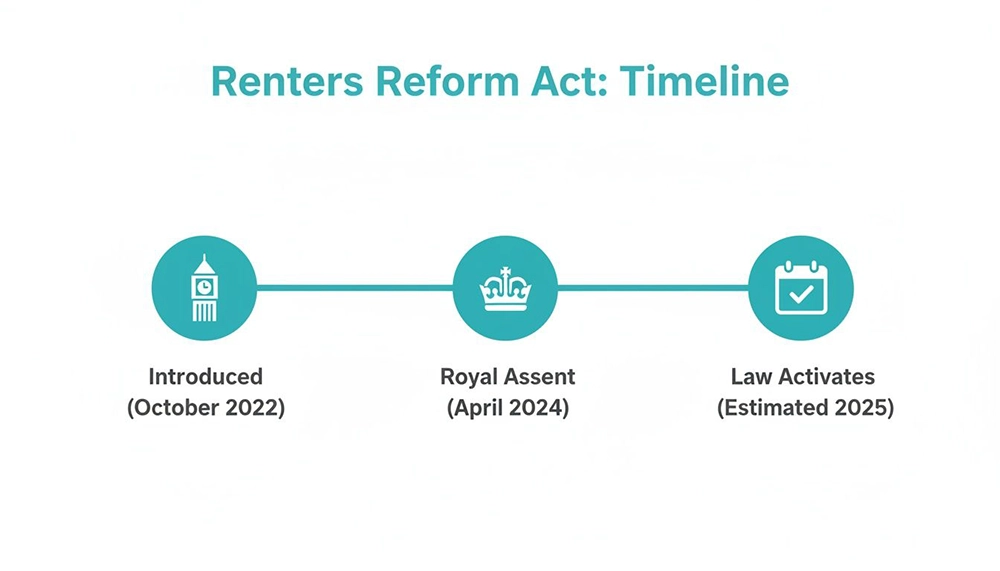
Key Implementation Phases Explained
Getting your head around the timeline isn't just about a single date; it's a sequence of events. Think of it like this: Royal Assent is the moment the planning permission for a new building is granted. It's a massive step, but you can't move in until the builders have finished and the utilities are connected. That's what the next phase is all about.
Here are the key stages to watch:
- Royal Assent (24 May 2024): This was the formal moment the King approved the Bill, officially turning it into the Renters (Reform) Act. It's now on the statute books, but its main powers are dormant.
- 'Appointed Day' (Implementation Date): This is the future 'go-live' date. The government has stated it will provide at least six months' notice before this day arrives. This is when the big changes—like the end of Section 21 evictions and the switch to periodic tenancies—will apply to all new tenancies.
- Second 'Appointed Day': At a later date, all existing tenancies will also be moved over to the new system. This ensures the entire rental market eventually operates under the same set of rules.
This phased approach is designed to give everyone—landlords, tenants, letting agents, and the court system—time to prepare.
Key Dates and Changes in the Renters Reform Act
To help you keep track, here’s a quick summary of the milestones and what they mean for you.
| Milestone / Change | Effective Date | What This Means for You |
|---|---|---|
| Royal Assent | 24 May 2024 | The Bill officially became law. No immediate changes to tenancies, but the clock is now ticking. |
| First Implementation Date | To be confirmed (at least 6 months' notice will be given) | Section 21 is abolished for all new tenancies. All new tenancies become periodic. |
| Second Implementation Date | To be confirmed (will follow the first date) | The new rules will apply to all existing tenancies, moving them to the new system. |
This table shows that while the Act is law, the practical changes are still on the horizon. The key is to use this preparatory period wisely.
We're keeping a close eye on all the developments and will continue to share practical advice. You can find more useful guides for landlords to help you navigate this transition on our blog.
Understanding the End of Section 21 Evictions
The single biggest shake-up in the Renters (Reform) Bill is getting rid of Section 21 evictions. You might know them as ‘no-fault’ evictions. For decades, this has been the standard way for landlords to regain possession of their property, simply because they could, without giving a specific reason.
Think of the old system as a straightforward exit clause. It gave landlords a huge amount of flexibility, but it left tenants walking on eggshells. Even a perfect tenant could be asked to leave with just two months’ notice, creating massive uncertainty for England's 11 million private renters. The government’s goal here is to give people a proper sense of security in their own homes.
This is a fundamental shift in how tenancies work. You’ll no longer be able to just end a tenancy when a fixed term comes to an end. Instead, you will need a legitimate, legally recognised reason to ask a tenant to leave, and you’ll have to be able to prove it. We're moving from a ‘no-fault’ world to a ‘grounds-based’ one.
The New Reality of Periodic Tenancies
A massive part of making this work is the move away from fixed-term contracts. Under the new Bill, all new tenancies will become rolling, periodic tenancies right from day one. This means there's no longer a natural "end date" to a tenancy agreement.
Imagine a subscription service, like Netflix, that just keeps rolling month after month unless it's cancelled for a valid reason. That’s pretty much what tenancies will become. This structure is the engine that drives the end of Section 21, because without a fixed endpoint, there’s no trigger for a no-fault notice.
This change is universal. Once the law is fully in force, every new tenancy will start as periodic, and all existing fixed-term agreements will automatically switch over. The aim is to create a single, unified system for everyone.
For landlords, this is a major operational adjustment. The focus has to move away from managing tenancy end-dates and towards meticulously documenting everything. You'll need to justify the need for possession based on specific grounds, like wanting to sell up or dealing with tenant breaches.
How This Changes the Landlord-Tenant Dynamic
Scrapping Section 21 completely rebalances the relationship. It forces a more structured and evidence-based approach to managing your properties, as the power to end a tenancy now depends on clear, legally defined circumstances.
This doesn't mean landlords are left powerless. Far from it. The Bill actually strengthens existing grounds for possession under Section 8 and introduces new ones to fill the gap left by Section 21. We'll dig into those in the next section, but the key takeaway is simple: you must have a valid reason.
To get ahead of the curve, here's what you should be thinking about:
- Documentation: Keeping perfect records of rent payments, emails, texts, and inspection reports is no longer just good practice – it's essential.
- Tenancy Agreements: Your current agreements will need a serious update to reflect the new periodic nature of tenancies.
- Communication: Good, professional communication has always been important, but now it’s your best tool for preventing disputes that could end in court.
The answer to "when will the renters rights bill become law" and bring in these changes isn't set in stone yet, but the direction of travel is clear. This time before it all kicks in is the perfect opportunity for landlords to get their house in order and adapt to a rental market where long-term tenant security is the new norm.
Getting to Grips with the New Grounds for Possession
With Section 21 on its way out, the updated Section 8 grounds are set to become every landlord's essential toolkit. This change isn’t about stripping away your rights; it’s about making the process of regaining your property far clearer and more reliant on solid evidence. Instead of a 'no-fault' option, you’ll now need a specific, legally sound reason to end a tenancy.
Think of it this way. Section 21 was like a universal key that could open any door without needing an explanation. The new Section 8 is a set of specific keys, each cut for a particular lock. There’s one for selling up, another if you need to move in, and a few more for when a tenant breaches their agreement. Your job is to know which key to use and when. The government has beefed up these grounds to make sure you can still manage your assets effectively.
This shift makes meticulous record-keeping more important than ever. It moves from being just good practice to being absolutely critical. Every text, every rent payment, and every complaint now becomes part of a paper trail you might need down the line.
New Mandatory Grounds for Landlords
To balance the loss of Section 21, the Act brings in new mandatory grounds. If you can prove your case, the court must grant possession. These are designed to cover legitimate, everyday situations where you genuinely need your property back.
Two of the most significant new grounds are:
- You're Planning to Sell: If you decide it's time to sell your rental property, this will be a mandatory ground to regain possession.
- You or Family are Moving In: If you or a close family member needs to live in the property, that’s another new mandatory ground.
There are important safeguards, though. You can't use these grounds within the first six months of a tenancy. This stops the system from being exploited to create a revolving door of short-term lets and gives tenants a bit of stability when they first move in.
The goal here is fairness. Tenants get more security, but landlords get clear, legally sound routes to take back their property for genuine reasons. The law simply asks you to state your reason and have the evidence to back it up.
Tackling Anti-Social Behaviour and Rent Arrears
A big concern for landlords is how to deal with problem tenancies, a question that's become more urgent now that we know when the renters rights bill will become law. The Act aims to give you stronger tools for this. The ground for serious anti-social behaviour has been strengthened, and the notice period is shorter, allowing you to act faster against tenants causing serious disruption or engaging in criminal activity.
Crucially, the rules around rent arrears have been completely overhauled. The new system tries to strike a tricky balance: protecting tenants who hit a temporary rough patch while allowing landlords to act decisively against those who persistently don't pay. This is one of the biggest statistical shifts in the new law.
A key change from the Renters' Rights Act, set to take effect on 1 May 2026, more than doubles the mandatory rent arrears eviction threshold. This reform is designed to protect tenants as UK private rents surged by 8.6% year-on-year to an average of £1,224 outside London in mid-2025, according to ONS data. You can find out more about these reforms in the official government guide.
How the Updated Arrears Ground Will Work
The mandatory ground for rent arrears has been reshaped to target only the most serious and repeated cases. To use it, a tenant must have been in at least three months’ rent arrears on at least three separate occasions within a three-year period. This structure is designed to stop tenants from being evicted for a single, one-off financial wobble.
Here’s a simple breakdown of the process:
- Serve Notice: Once a tenant meets that arrears threshold, you serve a Section 8 notice, giving them four weeks to sort things out.
- Apply to the Court: If the debt isn't cleared, you can then apply to the court for a possession order.
- The Hearing: Because this is a mandatory ground, if you can prove the arrears existed when you served the notice and are still present at the hearing, the judge has to grant possession.
While the bar is higher, this new system gives landlords a clear and certain route for dealing with significant and persistent rent arrears. Your rent payment records will be the most important evidence you have.
How Rent Increases and Tenancy Rules Will Change

Aside from the headline-grabbing changes to evictions, the Renters (Reform) Act gets into the nitty-gritty of day-to-day tenancy management. It introduces some major shifts aimed at making things fairer and more transparent, especially when it comes to two of the most common friction points: rent rises and pets.
The new law is all about standardising processes that, until now, have been a bit of a free-for-all. The goal is to create a more predictable and level playing field for everyone involved. Getting your head around these changes is just as important as understanding the new grounds for possession.
A New Standardised Process for Rent Increases
The days of landlords using varied or informal rent increase clauses in their tenancy agreements are numbered. The Act is bringing in a single, unified system for increasing rent, which should make the whole process much clearer for tenants and landlords alike.
Under the new rules, landlords will only be able to increase rent once per year. To do this, they’ll have to use a specific legal notice, much like the current Section 13 process. This takes the guesswork out of it and ensures tenants get a formal, properly served notification. On top of that, the notice period for any rent increase will be bumped up to two months, giving tenants more breathing room to manage their finances or challenge the rise if they need to.
This new framework is all about transparency. By mandating a single, official process, the Act aims to prevent sudden, unexpected rent hikes and gives tenants a clear mechanism to understand and respond to any proposed changes.
Following a single, legally compliant path isn't just about protecting tenants; it also protects you as a landlord by making sure you're doing everything by the book.
Challenging Unfair Rent Increases
Going hand-in-hand with the new process is a much stronger right for tenants to challenge what they see as an excessive increase. If a tenant believes a proposed new rent is out of step with the local market rate, they can take their case to a First-tier Tribunal.
In the past, many tenants were reluctant to go down this route, worried that their landlord might just serve them a Section 21 notice in retaliation. With no-fault evictions set to be abolished, tenants will be empowered to use this right without the fear of losing their home hanging over them. This is a crucial detail for anyone wondering when the renters rights bill will become law and how it will actually feel on the ground.
Banning Rental Bidding Wars
Another big change is the outlawing of 'rental bidding wars'. Landlords and agents will be banned from inviting or encouraging prospective tenants to offer more than the advertised rent. Every property will have to be listed with a clear, fixed rental price.
This move is designed to inject some much-needed transparency into the market, especially in high-demand areas where these bidding wars have become all too common. It's worth noting that tenants can still voluntarily offer more if they choose, but you, as the landlord or agent, cannot solicit higher bids.
A New Right for Tenants to Keep a Pet
For years, blanket 'no pets' clauses have been a standard feature of tenancy agreements. The Renters (Reform) Act is set to make these clauses a thing of the past, completely changing the dynamic.
- Tenants gain the right to request a pet. Tenants will be able to formally ask for permission to keep a pet in the property.
- Landlords cannot unreasonably refuse. You'll have to consider every request and won't be able to rely on a blanket ban. Any refusal must be based on solid, reasonable grounds, like the property being genuinely unsuitable for that specific animal.
- You can require pet insurance. To protect your investment, the bill gives you the right to require the tenant to take out insurance that covers any potential damage caused by the pet.
This change recognises just how important pets are to people's wellbeing, while also giving landlords a practical way to safeguard their property. It forces a shift from a simple "no" to a more considered "yes, if...".
Preparing For The New Landlord Portal And Ombudsman

The Renters (Reform) Act is bringing in two major new systems set to boost transparency and hold everyone accountable: a mandatory digital Property Portal and a single, powerful Property Ombudsman. This is a huge leap forward in professionalising the private rental sector, shifting from scattered paperwork to one central, data-led system.
For landlords, this signals a big change. Your compliance is about to become a digital footprint. Think of the new Property Portal as a national landlord register—a central hub where every private landlord and their properties must be officially listed. The goal is to create one reliable source of information, making it easier for local councils to target rogue landlords and giving tenants clarity on who owns their home.
Crucially, this portal will act as a gatekeeper. Before you can even think about advertising a property or letting it out, it will need to be registered. It’s a simple but effective way to ensure landlords are meeting their legal duties right from the very start.
The Role Of The New Property Ombudsman
Working hand-in-hand with the portal is the new Property Ombudsman, which will become the one-stop shop for sorting out disputes. This single, mandatory scheme replaces the current confusing mix of redress services. It creates one clear, straightforward path for both landlords and tenants to find a solution without ending up in drawn-out, expensive court proceedings.
The Ombudsman will have real teeth, with the power to make binding decisions, order landlords to pay compensation up to £25,000, or demand specific actions like carrying out repairs. For landlords, joining won’t be optional—it will be a legal requirement.
This new framework is all about making dispute resolution quicker, cheaper, and easier for everyone. It gives tenants the confidence to raise genuine issues and offers landlords a clear, impartial process for resolving disagreements, taking a huge weight off the over-burdened court system.
Getting to grips with these new digital rules is key. For a sense of what’s coming, it’s worth looking at similar shifts in other areas. A good example is this essential guide to Making Tax Digital for landlords, which details a comparable move towards digital record-keeping.
Expected Implementation Timeline
So, we know when the Renters Rights Bill will become law in principle, but the rollout of these specific systems won't happen overnight. The government has confirmed a phased approach to make sure the tech is solid and landlords have enough time to get ready.
Here’s a rough guide of what landlords can expect based on current plans:
- Property Portal: The portal will be introduced in stages. The first phase is likely to begin in late 2026, starting with a trial rollout in specific regions. Full mandatory registration for every landlord in England will follow, probably stretching into 2027 or 2028.
- Property Ombudsman: Landlords will need to be signed up to the Ombudsman scheme from 2028. This gives the new organisation plenty of time to get properly established and fully operational.
Of course, these dates could still shift, but they give us a solid roadmap. A great first move is to make sure all your property details are organised and up to date, especially if you use online platforms. If you want to get ahead of the curve, you can register as a landlord on Rooms For Let and start getting your portfolio information sorted in one place. Being proactive now will make the switch to these new digital systems a whole lot smoother when the time comes.
Your Practical Landlord Checklist Before the Law Changes
Knowing the theory behind the Renters (Reform) Act is one thing, but putting it into practice is a different game entirely. As the commencement date inches closer, getting ahead of the changes is your best defence against compliance headaches and painful penalties. This period before the new rules go live is a golden opportunity to get your house in order.
This isn't about a frantic last-minute panic. Think of it as a methodical update of your documents and processes to align with the new legal landscape. By breaking it all down into manageable jobs, you can ensure a smooth transition for everyone involved and safeguard your investments for the long haul.
Getting started now means you won't be caught on the back foot when the final date is announced. This checklist turns the complex legal shifts into simple, actionable steps, making sure your operation is efficient, compliant, and penalty-proof from day one.
Audit and Update Your Tenancy Agreements
Right now, your tenancy agreements are probably built around the Assured Shorthold Tenancy (AST) model. That's about to become a thing of the past. Your most important job is to prepare a new template that reflects the move to periodic tenancies and weaves in all the new rules.
Your new agreement must get rid of any mention of a fixed term and ditch clauses that will become unenforceable, such as those old blanket ‘no pets’ bans. It also needs to accurately spell out the new grounds for possession under Section 8. This is your core legal document – getting it right isn't negotiable.
Review Your Internal Processes
The new law requires a more formal and evidence-based way of managing your properties. It's time to take a hard look at how you handle key tasks and make sure your record-keeping is watertight.
- Rent Increase Procedure: Get familiar with the new statutory form for rent increases (the updated Form 4). It’s a good idea to set up a calendar reminder system to make sure you only propose an increase once every 12 months.
- Possession Grounds: Create a simple internal guide for yourself on the updated Section 8 grounds. Make a note of the specific evidence you'll need for each one, especially for grounds like selling the property or dealing with rent arrears.
- Pet Requests: Design a clear and fair process for handling pet requests. This should include a standard request form and a checklist of reasonable things to consider so you can't be accused of an unfair refusal.
Proactive communication will be your greatest asset during this transition. A well-informed tenant is far less likely to raise a dispute. Consider drafting a simple, clear letter to your existing tenants explaining the upcoming changes and what it means for them.
Prepare for Digital and Financial Compliance
The Act is also bringing in new digital requirements and changing how you can handle tenancy finances. Getting your advertising and financial protocols in line now will save you a world of trouble later. This includes reviewing your property management approach, and for many landlords, looking into specialist landlord insurance is a vital step in this new environment. For more information, you can explore comprehensive landlord insurance options to ensure your assets are protected.
Finally, a simple but crucial change: adapt your property listings. You must remove any language that encourages rental bidding wars and ensure all advertisements state a single, fixed rental price. It’s a straightforward tweak that ensures you comply with the new transparency rules right from the start.
To help you stay on track, we’ve put together a simple checklist. This table breaks down the essential tasks, explaining why they're important and giving you a suggested timeline to work towards.
Landlord Compliance Checklist Before Commencement
| Action Item | Why It's Important | Recommended Completion Date |
|---|---|---|
| Draft New Tenancy Agreement | Your existing ASTs will be outdated. The new template needs to reflect periodic tenancies and updated possession grounds. | 3 months before commencement |
| Update Rent Increase Process | You must use the new statutory form (Form 4) and are limited to one increase per 12 months. A formal process avoids errors. | 3 months before commencement |
| Create Pet Request Protocol | Unreasonable refusals will be challengeable. A fair, documented process is your best legal defence. | 2 months before commencement |
| Review Section 8 Grounds | You need to know what evidence is required for each new ground (e.g., selling, moving in family). | 2 months before commencement |
| Check Property Listings | All adverts must state a single price to comply with the ban on rental bidding. | 1 month before commencement |
| Update Insurance Policies | The new risk landscape may affect your cover. Check your policy covers the new tenancy types and legal risks. | 1 month before commencement |
| Prepare Tenant Communications | A clear letter explaining the changes to existing tenants will prevent confusion and disputes later on. | 1 month before commencement |
Working through these steps methodically will put you in a strong position when the new law takes effect. It’s all about preparation, ensuring that the transition is just a standard part of your business operations rather than a source of stress.
Your Questions Answered: The Renters Reform Bill
As the new law gets closer, it’s completely normal for landlords to be asking how these huge changes will actually work in practice. Moving away from a system we’ve known for decades can feel a bit daunting.
This final section cuts through the noise to tackle the most common questions we're hearing from landlords. We’ll get straight to the point with clear, practical answers focused on the real-world job of managing your properties under the new rules.
Does the Renters Reform Bill Apply to Existing Tenancies?
Yes, it absolutely does. This is probably one of the most critical points to get your head around. The new law will be rolled out in two main stages, but the end goal is for every single tenancy to operate under the same set of rules.
When the Act first comes into force, it will apply to all new tenancies starting on or after that date. Then, on a second, later date, all existing Assured Shorthold Tenancies (ASTs) will automatically convert to the new system. This means the end of Section 21 and all the other new rules will apply to your current tenants just as they do to future ones.
Can I Still Evict a Tenant for Not Paying Rent?
Yes, you can. The key difference is that with Section 21 gone, you’ll need to use the updated Section 8 grounds for possession, and the goalposts have moved slightly.
For rent arrears, the mandatory ground has been tweaked to focus on tenants with a history of non-payment. To use it, a tenant must have been in at least three months' of arrears on three separate occasions within a three-year window. This change ensures you can still take decisive action against serious, persistent debt, while offering a bit of breathing room for tenants who hit a short-term financial rough patch. The notice period for this ground will also be increased to four weeks.
What Happens to the ‘No Pets’ Clause in My Tenancy Agreement?
Once the new law is fully active, putting a blanket ‘no pets’ clause in your tenancy agreement will no longer be possible. The whole dynamic is shifting from an outright ban to a more reasonable conversation.
Tenants will have a legal right to request to keep a pet, and you won’t be able to unreasonably say no. To protect your property, however, you will have the right to insist that the tenant takes out specific pet insurance to cover any potential damages.
This change is a perfect example of the Bill's balancing act. It acknowledges how important pets are to tenants' wellbeing, while giving landlords a practical, financial safeguard against the risk of damage.
How Will the New Property Ombudsman Affect Me?
Joining the new, single Property Ombudsman scheme will be a legal requirement for every private landlord in the country. This organisation is being created to offer a fair, independent, and binding way to settle disputes between landlords and tenants.
Its main job is to stop so many disagreements from ending up in costly and slow court proceedings. The Ombudsman will have the power to order you to carry out repairs, pay a tenant compensation, or take other steps to put things right. It’s a core part of the government’s plan to professionalise the private rented sector.
Navigating these changes can feel complex, but you don’t have to do it alone. At Rooms For Let, we provide the tools and resources to help landlords and HMO operators connect with quality tenants across the UK. Advertise your spare rooms and properties on a platform built for today's rental market. Find out more on the Rooms For Let website.