Finding a flatmate in London is a whirlwind. With high demand and even higher rents, the whole process moves at a pace that can feel relentless, but trust me, with a bit of strategy, it's completely doable. Your success really boils down to being prepared, knowing where to look, and getting your head around the unique chaos of the city's rental market.
Understanding the London Flatshare Scene

The London flatshare market moves at a speed that genuinely shocks newcomers. A great room listed in the morning can easily be gone by teatime. That isn't an exaggeration; it’s just the reality of a city with people constantly coming and going. In other places, you might have weeks to mull over a decision. Here, you often need to be ready to say "yes" within days, if not hours.
It's all driven by a classic supply-and-demand problem. Thousands of students, young professionals, and people from all over the world land in London every month, all looking for a decent, well-located room that doesn't cost the earth. This fierce competition shapes every single part of your search, from the first message you send to how quickly you can drop everything for a viewing.
Setting Realistic Expectations
Before you even start scrolling, it’s crucial to get your expectations in line with reality. The London rental market is one of the most expensive on the planet, and facing the financial side of things is step number one. It's not just students sharing anymore; data shows a big jump in older age groups flat-sharing over the last decade. It's just a practical way to live in this city.
Here are a few home truths to get you started:
- Financial Readiness: You absolutely must have your deposit (which is legally capped at five weeks' rent) and the first month's rent ready to go. Landlords won't wait.
- Pace of the Search: Be prepared to make this a part-time job for a little while. That means checking new listings every day and being flexible enough to attend viewings, often at very short notice.
- Competition is High: Remember, you're not just choosing a room—you're also being chosen. A friendly, reliable, and financially stable profile will make you stand out from the crowd.
The search isn’t just about finding four walls and a roof; it’s about finding people you can actually live with. Being on the same page about everything from cleanliness to social habits is just as vital as the location or the rent.
If you’re moving to London from scratch, using an ultimate moving to new city checklist can be a lifesaver for getting organised. Getting to grips with these dynamics early on will set you up for a much smoother search, and for more insights into the rental world, you can always explore the resources over on the Rooms for Let blog.
Get Real: Your Budget and Flatmate Wishlist

It’s easy to get swept up in the fantasy of a perfect Zone 2 flat, but let's be honest—a stress-free flatmate hunt starts with a dose of reality. Before you even think about browsing, you need to nail down your budget. This isn't just about avoiding future money worries; it's about making your search focused and efficient from day one.
So many people trip up here. They fixate on the advertised rent and completely forget the mountain of other costs that come with living in the capital. Your maximum rent isn’t a number you just feel good about; it's a hard figure calculated from all your London-specific outgoings.
Crunching the Numbers for Your True London Budget
Grab your monthly take-home pay and let’s work backwards. Rent is the big one, of course, but it’s just the first slice of the pie. To figure out what you can genuinely afford, you have to subtract all the other non-negotiable costs of a London flatshare.
Here’s a realistic breakdown of what you need to factor in:
- Council Tax: This is the big variable. It changes dramatically from one borough to the next. Do a quick search on the council website for your target areas to get a real estimate.
- Utilities: We’re talking gas, electricity, and water. A safe bet is to budget around £80-£120 per person per month, but always ask to see recent bills during viewings.
- Internet: A modern-day essential. This is usually a fixed cost, split evenly between everyone in the flat.
- Transport: A monthly Travelcard for Zones 1-3 will set you back over £190. If your new place isn't a short walk from work, this is a major cost to include.
- Living Expenses: Don’t forget the rest of life! Groceries, nights out, and everything else you spend money on needs to be accounted for.
Once you’ve tallied these up and subtracted them from your net income, the number you're left with is your true, sustainable rent budget. This is the figure that will guide your entire search.
Defining Your Ideal Home and Housemates
With your budget locked in, it’s time to think about what you actually want and need from your home and the people in it. This isn’t about being fussy; it’s about self-awareness. Clashing lifestyles are the number one source of flatshare drama, trust me.
Go deeper than vague terms like "tidy" or "friendly." What do those words actually mean to you in practice? Make a clear list of your absolute non-negotiables and the things that would be nice to have.
Your non-negotiables are the foundational pillars of a happy home life. Compromising on these is a recipe for long-term frustration. Be honest with yourself about what truly matters.
For instance, instead of just wanting a "clean" person, define it. Does that mean dishes are washed immediately after eating? Or that the bathroom gets a proper clean every weekend? Getting specific is your best friend here.
Crafting a Profile That Attracts the Right People
Now, you’ll use all this hard work to build a killer profile on flat-sharing websites. This is your advert for yourself, a chance to sell yourself as the perfect flatmate while filtering out people who just won't be a good fit. A great profile makes a world of difference to the quality of replies you get.
Your profile should always include:
- A Punchy Headline: Something like, "28-year-old marketing pro looking for a social but respectful flatshare in East London."
- The Practical Details: Be upfront about your budget and when you need to move.
- A Bit About You: Mention your job, what your typical week looks like ("I WFH two days a week"), and a couple of hobbies. Help people imagine what it would be like to live with you.
- What You’re Looking For: This is where you bring in your wishlist. State your non-negotiables clearly but politely. For example, "Ideally looking for a home where we can hang out sometimes but also respect each other’s downtime, especially on weeknights."
Putting real effort into your profile pays off. Once you’re ready to post, check out the different advertisement prices and options to make sure you get the visibility you need to connect with the right people quickly.
Where to Actually Find Your Future Flatmates
With your budget mapped out and your wishlist clear, it’s time to dive in. Knowing where to focus your energy is the secret to finding great flatmates in London without drowning in a sea of options. The right platform doesn't just save you time; it dramatically improves the quality of people you connect with.
Think of this stage as casting a wide but very smart net. You'll get the best results by using a mix of dedicated flat-hunting websites, social media groups, and the good old-fashioned power of your personal network. Each one has its own vibe and etiquette, and getting a feel for them will make your search a whole lot smoother.
The Big-Name Platforms
For most of us, the hunt starts with the major, well-established websites. These platforms are built specifically for the flat-sharing world and have enormous user bases, which means one thing: more choice for you. They are the undeniable starting point for anyone serious about their search.
SpareRoom is the undisputed king of the UK flat-sharing scene. It’s the first stop for millions, so it has the highest volume of listings for both available rooms and people looking for them. Its sheer scale is its biggest plus, but that also means you’re up against a lot more competition. A standout profile and being quick with your messages are absolutely essential here.
Comparing Top Platforms for Finding London Flatmates
To get a clearer picture, it helps to see how the main players stack up against each other. Each one caters to a slightly different crowd and offers a unique experience.
| Platform | Best For | Key Features | Potential Cost |
|---|---|---|---|
| SpareRoom | The widest possible choice of rooms and flatmates across all budgets. | Massive user base, detailed filters, in-person 'SpeedFlatmating' events. | Free to browse and post basic ads; paid 'Early Bird' access gives you a 7-day head start on new listings. |
| Ideal Flatmate | Finding people based on personality and lifestyle compatibility. | A 20-question compatibility quiz matches you with like-minded individuals. | Free to create a profile and take the quiz; premium features for enhanced visibility. |
| Badi | A younger, more international crowd looking for a modern, app-based experience. | A slick, swipe-based interface that feels a bit like a dating app for flatmates. | Generally free for basic use, with options to boost your profile. |
| Rooms for Let | Proactively advertising yourself as a potential flatmate. | You can create a detailed profile in the Rooms Wanted section for landlords and flatmates to find you. | Free to create a 'Wanted' ad. |
Choosing the right platform often comes down to personal preference. It's often worth having a presence on a couple of them to maximise your chances.
On a positive note, the market has finally started to cool off a bit. For the first time since 2021, the number of available rooms in London is now higher than the number of people looking. This has caused a welcome 2% drop in average room rents, down from £1,015 to £993 per month—a bit of breathing room for renters. You can read more on this London flatshare supply and demand shift.
Using Social Media and Community Groups
Beyond the big websites, social media offers a more personal, community-focused way to find a flatshare. Facebook, if you know how to use it, can be an absolute goldmine. The trick is to join groups that are super specific to your interests or background.
Don't just type "London flatshares" into the search bar. Get more creative.
- Look for groups like "Kiwis in London," "East London Creative Flats," or even alumni groups from your university.
- These communities are often built on a foundation of shared trust, which can lead to a much better living dynamic right from the start.
When you post in these groups, your approach should be completely different from how you'd act on a formal platform.
- Show your personality. Share a friendly, recent photo of yourself and let your character shine through in your writing.
- Find a connection. If you’re in an alumni group, mention what you studied. Create that instant bit of common ground.
- Get involved. Don’t just post your ad and walk away. Comment on other people’s posts, offer a bit of advice if you can, and become a helpful member of the group.
The Untapped Power of Your Personal Network
Seriously, don't underestimate word-of-mouth. It’s often the most overlooked yet most successful way to find a genuinely great living situation. Why? Because people you find through personal connections are already semi-vetted, which takes a massive layer of uncertainty out of the process.
Start by telling everyone you know that you're looking. This means colleagues, friends, and family—even if they don't live in London. You never know who has a cousin moving out of an amazing flat or a co-worker whose housemate is relocating for a new job.
A simple message on your personal social media or a quick mention in a work group chat can be all it takes. Think of it as a ripple effect; the more people who know you're searching, the wider your net is cast, and the higher your chances of hearing about a fantastic opportunity before it ever gets advertised publicly. This is how so many people land the best, most stable, and happiest flatshares in the city.
Mastering the Vetting and Viewing Process
So, you've connected with a few people online. That's the easy part. The real work begins now: figuring out if these digital profiles belong to people you can actually live with. This is where you move from screen to reality, and it calls for a mix of smart questions and sharp observation.
Think of it less as an interrogation and more like a mutual interview. You're both trying to discover if you can build a comfortable, respectful home together. Approaching it with that mindset makes the whole thing feel a lot less like a high-pressure exam.
This flowchart gives you a good idea of the paths people usually take to find flatmates in London, covering everything from apps to good old-fashioned networking.
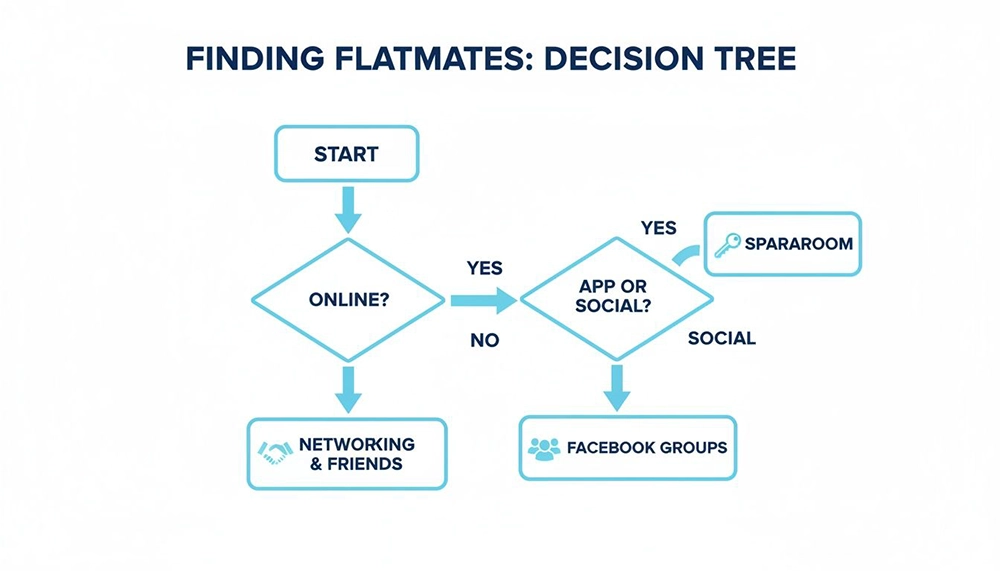
As you can see, while everyone defaults to online platforms, tapping into your personal network is still a brilliant way to find someone who’s already been "vetted" by people you trust.
The Art of the Flatmate Interview
Your goal here is simple: uncover lifestyle compatibility through a relaxed chat. Forget a rigid checklist of yes/no questions. You want to ask open-ended ones that get people talking about their habits, expectations, and general attitude to life. A quick coffee or a video call is a great first step before you commit to an in-person viewing.
Start with the basics, sure, but then move onto the stuff that really matters when you're sharing a home.
Here are a few areas you’ll definitely want to explore:
- Daily Routines: "What does a typical weekday look like for you? Are you an early bird or more of a night owl?" This is a subtle way to check for potential noise clashes.
- Work-Life Balance: "Do you work from home much? What’s your setup like?" A must-ask question in the age of hybrid working.
- Social Habits: "How often do you like having friends over? Are you more of a quiet-night-in person, or do you enjoy hosting?"
- Cleanliness Philosophy: Instead of the blunt "Are you tidy?", try something like, "What’s your take on cleaning rotas and keeping shared spaces like the kitchen and bathroom sorted?"
The most important thing is to listen to how they answer. If someone is vague or evasive about simple lifestyle questions, that can be a quiet but significant red flag. Trust your gut.
What to Look for During the Viewing
The property viewing is a two-for-one mission: you’re assessing the physical space and observing the dynamic with potential flatmates. London's market moves at lightning speed, but don't let that pressure you into glossing over the important details. Go in with a mental checklist.
Beyond just wondering if your bed will fit, look for the little things that make a big difference to daily life. Sniff for any signs of damp (that musty smell is a dead giveaway), check the water pressure in the shower, and make sure the windows actually close properly. These small annoyances can become major headaches over a year-long tenancy.
On the financial side of things, you need to be realistic. The market is no joke. Over the past five years, the average cost of a room in a London flatshare has shot up by an incredible 37%, climbing from £728 to £995 per month. After peaking at £1,015, costs have settled a little, with areas like South East London offering slightly more budget-friendly options around £951. You can get more insights into current London rent statistics on SpareRoom.
Key Questions to Ask the Existing Flatmates
If you're moving into an established flatshare, the viewing is your golden opportunity to get the real story from the people who already live there. Their answers will paint a much more honest picture than any online advert ever could.
Here are some absolute essentials to ask:
- What’s the landlord like? Are they quick to sort out maintenance issues? This will massively impact your quality of life.
- How do you handle the bills? Is there a clear system in place, like a joint account or a bill-splitting app? Messy finances are a classic source of flatmate friction.
- What’s the general vibe of the flat? Do people tend to hang out together, or does everyone mostly do their own thing?
- Is there anything you wish you’d known before you moved in? This question is brilliant. It’s open-ended and can uncover all sorts of unexpected truths about the flat or the neighbourhood.
By mixing insightful questions with careful observation—of both the people and the property—you give yourself the best possible shot at finding a flatshare that genuinely feels like home.
Securing Your Room and Signing the Paperwork
You’ve navigated the viewings, mastered the flatmate interview, and finally found the perfect match. The finish line is in sight, but don't rush these last few steps – they’re arguably the most important. This is where you move from friendly chats to legally binding agreements, and getting it right is your best protection against future headaches.
Making it official is about more than just a handshake and a move-in date. It involves a careful review of the paperwork that defines your rights and responsibilities as a tenant. Rushing this stage is a common mistake that can lead to serious stress down the line, so take a deep breath and give the documents the attention they deserve.
Decoding Your Tenancy Agreement
The tenancy agreement is the cornerstone of your new living arrangement. It’s a legal contract between you (and your flatmates) and the landlord, and you need to read every single clause before you sign anything. Yes, even the boring-looking ones.
Pay special attention to these key areas:
- Break Clause: This is your get-out-of-jail-free card. A typical break clause lets you or the landlord end the tenancy early, usually after the first six months, by giving a set amount of notice.
- Tenant Responsibilities: Look for clauses detailing your obligations. This will clarify who is responsible for minor repairs (like changing a lightbulb) versus major ones that are the landlord's duty.
- Guest Policies: Some contracts specify how long guests can stay. Make sure this aligns with what you and your new flatmates expect and feel comfortable with.
- Notice Period: Understand exactly how much notice you must give before moving out at the end of your fixed term.
As you sort out the tenancy, it's also wise to consider practical security. This includes understanding tenant rights regarding changing locks, a vital step for peace of mind in any shared home.
Deposits Demystified
In the UK, you’ll usually encounter two types of deposits, and knowing the difference is crucial.
First up is the holding deposit, which you pay to reserve the room while your referencing checks are done. This is legally capped at one week's rent and should be put towards your first month's rent payment once everything is approved.
Next is the security deposit, the larger sum paid to cover potential damages. This is capped at five weeks' rent for properties where the annual rent is under £50,000. Crucially, your landlord must protect this deposit in a government-backed Tenancy Deposit Scheme (TDP) within 30 days of receiving it.
Your landlord is legally required to provide you with official information about where your deposit is protected. If they fail to do this, you may be entitled to compensation. Never hand over a deposit without a clear paper trail and confirmation of its protection.
The financial pressure of securing a room is a major hurdle. With the average London room rent hitting £995, you'd need a gross annual salary of at least £40,000 just to stay within the recommended 30% income rule. In reality, analysis shows that after tax, a salary closer to £50,000 is often needed for a comfortable net income. This starkly contrasts with London's median gross pay of just £35,900, a reality highlighted in Time Out's housing analysis.
The Unofficial Rulebook: Your Flatmate Agreement
While the tenancy agreement covers your relationship with the landlord, a flatmate agreement manages your relationship with each other. This isn't a legally binding document, but it's an incredibly powerful tool for preventing future arguments. Think of it as a simple, written record of the house rules you all agree on before moving in.
Your agreement should outline the practicalities of daily life:
- Bill Management: Decide exactly how bills will be split. Will one person pay and be reimbursed via a standing order? Or will you use a bill-splitting app to keep it simple?
- Cleaning Rota: Be specific. Who cleans the shared bathroom, and when? How often will the kitchen floors be mopped? Putting it in writing avoids the classic "I thought you were doing it" standoff.
- Shared Supplies: Agree on how you’ll handle communal items like toilet paper, cleaning sprays, and bin bags. A small monthly contribution to a house kitty often works well.
- Guest and Partner Etiquette: Set some reasonable ground rules for having guests over, especially overnight stays, to ensure everyone feels respected in their own home.
Putting these things in writing might feel a bit formal at first, but it creates clarity and a shared sense of responsibility from day one. It transforms unspoken assumptions into clear, agreed-upon expectations, paving the way for a peaceful and respectful home.
Got Questions About Finding a Flatmate?
Navigating the London flatshare scene throws up a whirlwind of questions, especially when you get to the fiddly bits like deposits, house rules, and sussing out potential red flags. Getting straight answers is key to moving forward with confidence.
Let's tackle some of the most common queries head-on. This part of the process is less about the initial search and more about securing the right situation, making sure you're protected and set up for a decent living arrangement.
How Much Deposit Can I Be Asked to Pay for a Room?
Thankfully, there are legal caps on deposits in the UK, which gives tenants some much-needed protection. For pretty much any flatshare where the total yearly rent is under £50,000, the absolute maximum a landlord can ask for is five weeks' rent.
So, if your room is £900 per month, you’d first work out the weekly rent (which is roughly £207). Based on that, the maximum deposit would be around £1,038.
Crucially, this security deposit must be lodged in a government-approved tenancy deposit protection scheme. You might also be asked for a holding deposit to take the room off the market, but this is capped at one week's rent and should be put towards your first month's payment once everything goes ahead.
What Are Some Major Red Flags to Watch For?
When you’re meeting potential flatmates in London, your gut instinct is your best friend. Certain comments or behaviours during a chat can be subtle but significant warning signs.
Keep an eye out for these tell-tale signs:
- Vagueness about their job: If they’re cagey about what they do for a living or how they earn money, it could hint at financial instability down the line.
- Blaming past flatmates: Someone who has a horror story for every single person they've ever lived with might just be the common denominator in all those dramas.
- Massively different lifestyle expectations: If your idea of "clean" is a weekly deep scrub and theirs is… not, you're heading for friction. The same goes for socialising at home.
- Dodging agreements: Be very wary of anyone who seems reluctant to sign a proper tenancy agreement or even just a simple, informal flatmate agreement.
A few minutes of direct, slightly awkward questions upfront are infinitely better than signing up for a year of stress. Don't be shy about getting clarity on the things that really matter to you.
Should I Join an Existing Flatshare or Start a New One?
This decision really comes down to your personality and how much life admin you can handle. Both paths have their own clear pros and cons.
Jumping into an existing flatshare is usually the quicker, simpler route. The flat is already set up, the bills are sorted, and you get an instant feel for the dynamic of the house. The biggest downside? You have less say and have to slot into a pre-existing culture.
On the other hand, starting a new tenancy from scratch gives you complete control. You choose the property, the neighbourhood, and you get to create the house rules with your new flatmates. It’s a brilliant way to build your ideal home, but it comes with a tonne more admin—think group credit checks, setting up all the utility accounts, and furnishing the common areas.
What Is the Best Way to Manage Shared Bills and Expenses?
The secret to a peaceful, conflict-free home is setting up a transparent and fair system for money from day one. Don't leave it to chance; agree on a clear process before the first moving box is even through the door.
For fixed monthly costs like council tax and Wi-Fi, the easiest way is for everyone to set up a standing order into one designated housemate's bank account. This automates the whole thing and means bills get paid on time without anyone having to chase.
For variable bills like gas and electricity, a free bill-splitting app like Splitwise is a total game-changer. It lets everyone see exactly who owes what, which stops any resentment from building up. It’s also a great idea to create a small house "kitty" for shared supplies like cleaning products or loo roll, with everyone chipping in an agreed amount each month.
Ready to find your perfect flatshare? At Rooms For Let, we connect you with thousands of listings across London and the UK. Start your search today on roomsforlet.co.uk and make finding your next home simple and efficient.
-finding-flatmates-in-london