Ending a tenancy agreement the right way is less about legal wizardry and more about knowing which path to take. The rules really depend on what kind of room to rent agreement you have. For a periodic (rolling) tenancy, you’re generally looking at giving at least two months' notice. If you’re on a fixed-term tenancy, things are usually simpler as the end date is already set, unless you need to use a break clause.
Getting that first step right is absolutely crucial.
Your Guide to Ending a Tenancy Correctly
Figuring out how to end a tenancy agreement can feel like wading through legal jargon. In reality, it all boils down to your specific situation and sticking to the correct procedure. The right approach is dictated entirely by the type of agreement you have and why you need to end it.
Get this wrong, and you could be facing costly delays or even legal challenges. A solid grasp of the basics isn't just helpful; it's essential for any landlord or HMO operator in the UK.
The two main routes you'll follow depend on whether you're dealing with a fixed-term tenancy or a periodic one. A fixed-term agreement has a clear end date, and that’s when the tenancy wraps up unless a new one is signed. A periodic tenancy, on the other hand, just keeps rolling month-to-month until either you or the tenant gives the proper notice.
Your First Steps and Key Considerations
Before you even think about serving notice, you need to make sure your own house is in order. You can’t legally serve a Section 21 notice to get your property back if you haven't ticked some very important boxes.
These aren't optional extras; they're non-negotiable duties. Have you:
- Protected the tenant's deposit in a government-approved scheme?
- Given the tenant a current Gas Safety Certificate?
- Provided a copy of the property's Energy Performance Certificate (EPC)?
- Supplied the government's 'How to Rent' guide at the very beginning of the tenancy?
If you've missed any of these, your notice will be invalid from the get-go. You’ll have no choice but to fix the issue and start the whole process over again.
This flowchart helps visualise those initial questions you need to ask yourself to figure out which path to take.
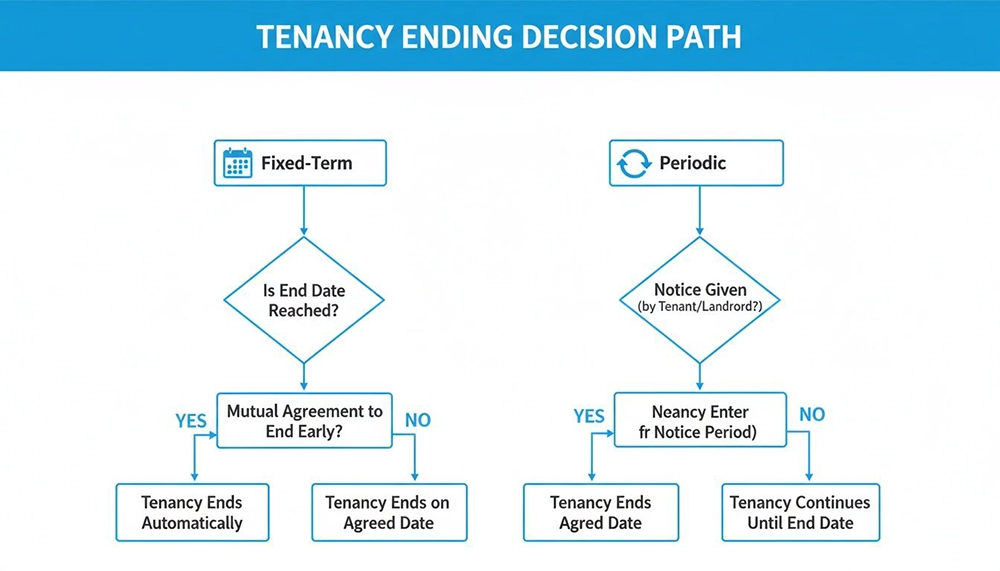
As you can see, the type of tenancy—whether it's fixed-term or periodic—is the biggest factor determining what you do next, from simply letting the contract expire to serving formal notice.
One of the most common alternatives to formal notices is what's known as a mutual surrender. This is essentially a negotiated deal where you and the tenant both agree to end the tenancy early. It can be a much faster and more amicable solution if everyone is on the same page. Just be sure to get it all documented properly to make it legally binding.
To simplify these paths, here’s a quick overview of the most common ways to end an agreement.
Common Ways to End a Tenancy Agreement
| Method | Typical Landlord Notice | Key Consideration |
|---|---|---|
| Fixed-Term Expiry | None (tenancy ends on the last day) | Ensure the tenancy doesn't automatically become periodic if the tenant stays. |
| Section 21 Notice | At least 2 months | You must have met all legal obligations (deposit, EPC, etc.) for this to be valid. |
| Section 8 Notice | 2 weeks to 2 months (depends on grounds) | Used when the tenant has breached the agreement (e.g., rent arrears). |
| Break Clause | As specified in the agreement | Can only be used after a certain point in the fixed term. |
| Mutual Surrender | None (by agreement) | Must be a genuine agreement from both parties, ideally documented in writing. |
This table covers the main scenarios, but the devil is always in the detail of your specific tenancy agreement and circumstances.
A Landlord’s Essential Toolkit for Ending a Tenancy
When you need your property back, you have to play by the book. For most landlords letting under an Assured Shorthold Tenancy (AST), this means getting to grips with two key legal tools: the Section 21 notice and the Section 8 notice.
Think of these as more than just paperwork. They are powerful legal instruments, and a single mistake in how you use them can derail the entire process, costing you months in delays and lost rent.

The 'No-Fault' Route: Using a Section 21 Notice
The Section 21 notice is often called the ‘no-fault’ route. It’s your right to regain possession of your property after a fixed term ends, and you don’t have to give a reason.
But there’s a catch. Its power depends entirely on you having been a compliant landlord from day one. You must have provided your tenant with all the prescribed information at the start of the tenancy:
- The property’s Energy Performance Certificate (EPC).
- A current Gas Safety Certificate.
- The government's official "How to Rent" guide.
Crucially, you also need proof that you protected their deposit in a government-approved scheme within 30 days of receiving it.
If you’ve missed a single step on this compliance checklist, your Section 21 is invalid, and you’ll have to start the notice period all over again. For example, if you protected the deposit a week late, you can’t serve a valid Section 21 until you have returned the deposit money to the tenant in full.
This tool is on borrowed time. In 2024, no-fault evictions under Section 21 surged by a staggering 20% year-on-year. Official figures showed bailiffs evicted nearly 3,000 households between October and December alone.
With the Renters' Rights Act gaining Royal Assent on October 27, 2025, Section 21 is set to be abolished entirely from May 1, 2026. This recent spike shows just how vital it is for landlords to master every tenancy-ending procedure available.
When to Use a Section 8 Notice
Your other key tool is the Section 8 notice. This one is different. You use it when your tenant has actually broken a clause in their tenancy agreement. It relies on specific legal grounds, and the burden of proof is on you.
Some of the most common grounds for serving a Section 8 include:
- Serious rent arrears: This is Ground 8. It’s a mandatory ground, meaning a judge must grant possession if the tenant is at least two months behind on rent when you serve the notice and on the day of the court hearing.
- Consistently paying rent late: Even if the arrears aren’t huge, Ground 11 can be used if there’s a persistent pattern of late payments.
- Antisocial behaviour: Grounds 14 and 7a cover behaviour that causes a nuisance to neighbours—a critical issue, especially in shared properties like HMOs.
- Damage to the property: If the tenant’s actions or neglect have caused the property to deteriorate, Ground 13 applies.
When you’re building a case for a Section 8, documentation is everything. For rent arrears, you need a crystal-clear schedule showing every missed payment. For antisocial behaviour, log every complaint with dates and times, and collect statements from neighbours if they’re willing. Without solid proof, your claim is just your word against theirs.
The legal landscape is constantly shifting. For a deeper dive into the complexities governing tenancies, including landlord obligations and termination clauses, this guide on Landlord-Tenant Laws offers some valuable perspectives. Although it's based on a different jurisdiction, the core principles of meticulous record-keeping and procedural correctness are universal. Mastering these tools today will ensure you can manage your portfolio lawfully and efficiently, no matter what changes lie ahead.
Navigating Real-World Tenancy Scenarios

The legal paperwork provides the rulebook, but real life is rarely that clean-cut. Knowing how to end a tenancy agreement often means applying those rules to messy, human situations where a bit of communication and flexibility can be just as crucial as any formal notice.
These scenarios pop up all the time. A tenant might lose their job and ask to get out of a fixed-term contract early, or a joint tenancy can get messy when one housemate suddenly needs to move out. Knowing your options in these moments is the key to reaching a fair and lawful outcome for everyone.
When Your Tenant Asks to Leave Early
It's a classic situation: a tenant needs to break their fixed-term agreement. Legally, you’re not obligated to agree; a contract is a contract. However, taking a hard line isn't always the smartest move.
You have a couple of solid options here:
- Negotiate a Surrender: This is simply a mutual agreement to end the tenancy. A common approach is to ask the tenant to cover your re-letting costs and any rent until a new tenant is found. It's vital to get this locked down in writing with a formal Deed of Surrender.
- Allow Them to Find a Replacement: You can make the tenant responsible for finding a suitable replacement who, of course, has to pass all your usual referencing checks. This is a great way to minimise your void period, but you always retain the final say on who moves in.
An outright refusal can sometimes lead to the tenant simply walking away and abandoning the property, which creates a much bigger headache for you. It's nearly always more productive to work with them to find a solution.
Ending a Tenancy to Sell or Move In
Your own circumstances can change, too. You might decide it's time to sell the property or perhaps you need to move into it yourself. When this happens, you must follow the correct legal process, which usually means serving a Section 21 notice that lines up with the end of the fixed term or a periodic tenancy.
Transparency is your best asset here. Giving your tenant as much advance warning as possible, even before the formal notice period kicks in, can build a lot of goodwill and lead to a much smoother handover. Most tenancy endings don't need to be adversarial.
It’s worth noting that landlords needing to end tenancies is less common than you might think. The English Housing Survey for 2022-2023 found only 9% of private renters moved because their landlord asked them to leave. Of those, the vast majority were because the landlord was either selling up or moving back in themselves.
The Complexity of Joint Tenancies
Joint tenancies throw a unique spanner in the works. If just one tenant on a periodic tenancy serves notice to quit, it legally ends the tenancy for everyone. This can come as a huge shock to the remaining tenants who had every intention of staying.
If you're happy for the remaining tenants to stay on, you’ll need to draw up a brand-new tenancy agreement just for them. You can't just cross one name off the old contract. It’s a completely fresh start, which means new checks and a new signed agreement for all parties.
What About Lodgers?
Things are much simpler if you have a lodger living with you in your own home. A lodger agreement is a ‘licence to occupy’, not a tenancy, which changes the game completely.
You only need to give them 'reasonable notice' to leave, which is typically the same length as their rental payment period. So, if they pay you monthly, you give them one month's notice. No court order is needed if they refuse to leave. Once the notice period is up, you can legally change the locks, as long as you make sure to return all of their belongings. If you're looking for a lodger, you can see people searching for rooms on our Rooms Wanted board.
A Practical Checklist for the End of Tenancy
Once notice has been served and the tenancy end date is on the horizon, your focus needs to shift towards securing a smooth, professional handover. Honestly, a well-managed check-out process is your single best defence against disputes and financial headaches. This makes the final inspection one of the most important moments in the entire tenancy.
The goal here is simple: meticulously compare the property's current condition against the original check-in inventory report. This isn't just a quick look around; it's a proper audit where you document every single change, big or small. Those high-quality photos and detailed notes from day one? They're about to become your most valuable asset, providing clear, indisputable evidence of the property's starting condition.
Conducting the Check-Out Inspection
Whenever possible, try to conduct the check-out inspection with the tenant present. It’s a game-changer for transparency. Being there together allows you to discuss any potential issues on the spot, which can often head off a formal dispute before it even begins.
A solid inspection process should always include these steps:
- A Systematic Room-by-Room Review: Use the original inventory as your guide. Go through it line by line, checking off each item and noting its current condition. Don't rush this.
- Photographic Evidence is Key: Take clear, well-lit photos of any damage or discrepancies you find. These images are absolutely essential if you end up needing to make a claim against the deposit.
- Final Meter Readings: Get the final readings for gas, electricity, and water. It's best practice to have the tenant witness you do this, or even take a photo of the meter together. This simple step prevents almost all arguments over the final utility bills.
- The Key Handover: Make sure you get all sets of keys back – for doors, windows, sheds, the lot. If any are missing, you may be able to claim the cost of changing the locks from their deposit, provided it’s mentioned in your tenancy agreement.
To make sure you cover all your bases when a tenant moves out, it's worth following a comprehensive landlord's move-out checklist.
Fair Wear and Tear vs Damage
This is where so many disagreements start. You need to get your head around the difference between acceptable ageing and actual, chargeable damage. You simply can't charge a tenant for the effects of normal, everyday living. Getting this right is crucial for making fair and, more importantly, lawful deposit deductions.
Fair wear and tear is the natural, gradual deterioration of a property and its fittings through normal use over time. For instance, a carpet becoming slightly worn in the hallway is wear and tear. A massive red wine stain in the middle of that same carpet is damage.
Understanding this distinction in real-world situations is key, as it's rarely black and white.
To help clarify, here's a table breaking down some common scenarios that landlords face.
Fair Wear and Tear vs Chargeable Damage
| Item | Example of Fair Wear and Tear | Example of Chargeable Damage |
|---|---|---|
| Walls | Minor scuffs and faded paint from sunlight. | Large holes from removed fixings, crayon marks. |
| Carpets | Slight flattening in main walkways. | Burns, significant stains, or pet scratches. |
| Appliances | A worn button on the microwave from use. | A cracked shelf in the refrigerator. |
| Furniture | Minor scratches on a wooden table surface. | A broken chair leg or ripped upholstery. |
Ultimately, a bit of common sense goes a long way. Think about the item's age, its quality, and how long the tenants lived there. This context helps you make a fair judgement every time.
Managing the Deposit Return
Once the inspection is done and the keys are back, the clock starts ticking. By law, you have just 10 days from the tenancy’s official end date to either return the deposit in full or write to the tenant explaining any deductions you propose to make.
If you are making deductions, you must provide a crystal-clear, itemised breakdown of the costs. This needs to be supported by the evidence you gathered during the check-out inspection – your photos, notes, and any quotes or receipts for repairs.
Should the tenant disagree with your proposed deductions, they have the right to raise a formal dispute with the deposit protection scheme that holds the money. An impartial adjudicator will then look at the evidence from both sides and make a final decision. This is why keeping communication clear and professional at this stage is so important; it can save you from a long, drawn-out conflict.
Preparing For The Future Of UK Tenancy Agreements
The way landlords and tenants interact in the UK is on the verge of its biggest shake-up in a generation. The era of the fixed-term Assured Shorthold Tenancy (AST), a familiar cornerstone of the rental cycle for decades, is drawing to a close. Getting to grips with these changes isn’t just about future-proofing your business; it demands a fundamental rethink of your entire approach to property management, starting today.

This new landscape forces a pivot in strategy. As all tenancies are set to become periodic, the focus shifts from managing fixed end-dates to actively nurturing ongoing tenant relationships. Meticulous, detailed evidence gathering will become more crucial than ever, as you'll need clear, documented grounds to end any agreement.
The End of Fixed Terms and Section 21
The upcoming Renters' Rights Act 2025, which received Royal Assent on October 27, 2025, is the engine driving this transformation. From May 1, 2026, fixed-term tenancies will be a thing of the past, with all existing ASTs converting to periodic ones. Crucially, the legislation also scraps the Section 21 ‘no-fault’ notice, a tool many landlords have historically relied on. You can find out more by reading the complete guide to these new UK tenant laws.
This is a seismic shift, and it’s already causing ripples, particularly for certain rental models. A recent Goodlord survey found that a staggering 67% of letting agents believe this will have a severe negative impact on the student lets market, which is built around the academic year. The same survey predicts the changes will wipe out 27% of agency revenue that currently comes from tenancy renewals.
The bottom line is this: knowing how to end a tenancy agreement will soon depend entirely on having a valid, evidenced reason under the revised Section 8 grounds, like serious rent arrears or proven antisocial behaviour. Proactive management and crystal-clear communication are no longer optional—they’re essential.
Strategic Adaptations For Landlords
So, what does this actually mean for your day-to-day operations? It’s time to tighten up your processes right now to ensure your rental business stays robust and compliant in this new environment.
Your focus should be dialled in on three key areas:
- Enhanced Tenant Vetting: With tenants able to give two months' notice at any point, your initial selection process becomes your most important line of defence. Thorough referencing and background checks are vital for securing reliable, long-term tenants from the get-go.
- Meticulous Record-Keeping: Document everything. Every email, every text message, every inspection report, and every maintenance request needs to be logged. This paper trail is your armour if you ever need to regain possession of your property on specific grounds.
- Updated Tenancy Agreements: While all tenancies will become periodic, your agreement still needs to be watertight. It’s time to review and update your contracts to reflect the new legal framework, ensuring every clause is enforceable.
For many landlords, especially those managing HMOs or a portfolio of properties, these changes demand a more hands-on management style. Keeping a steady pipeline of high-quality prospective tenants is absolutely critical for minimising those costly void periods.
A huge part of this strategy is advertising your available rooms effectively. You can start by registering as a landlord on Rooms For Let to connect with thousands of potential tenants. By laying the groundwork now, you can confidently navigate the transition and maintain a successful rental portfolio for years to come.
Common Questions About Ending a Tenancy
Even with the best-laid plans, the end of a tenancy can throw up some tricky questions. Getting to grips with the answers now gives you the confidence to handle things correctly and legally, stopping small issues from spiralling into major disputes.
We’ve pulled together some of the most frequent—and challenging—questions that landlords ask, with straightforward answers to help you navigate these final stages.
What if a Tenant Refuses to Leave After a Valid Notice?
This is a scenario every landlord dreads. If a tenant stays put after a correctly served notice has expired, the one thing you absolutely cannot do is change the locks or remove them yourself. That’s an illegal eviction, and it carries severe penalties.
Your only legal path forward is to apply to the court for a possession order.
Once the court grants this, the tenant is legally required to move out. If they still don’t leave, the next step is applying for a warrant of possession. This authorises court bailiffs to carry out the eviction. It's so important that your initial notice was flawless, as any mistake could get the whole case thrown out.
It's an incredibly frustrating situation, but following the correct legal process is non-negotiable. Any attempt at a shortcut will only lead to far bigger legal and financial headaches. Patience and procedural correctness are your best friends here.
Can I Deduct Professional Cleaning Costs?
The short answer is: only if it's justified. You can deduct cleaning costs if the property is left in a worse state than it was at the start of the tenancy, allowing for fair wear and tear. A clause in your tenancy agreement that insists on a professional clean is generally unenforceable because of the Tenant Fees Act 2019.
Your ability to make a claim is only as strong as your evidence. A detailed check-in inventory packed with clear photos is your baseline. You then need to compare this against a thorough check-out report to prove the difference in cleanliness.
Always hold onto receipts for any cleaning services you pay for—you'll need them to justify the deduction from the tenant's deposit.
What Is a Deed of Surrender?
Think of a deed of surrender as a formal, mutual agreement to end a tenancy early. It’s the perfect tool when you and the tenant both agree to terminate the contract before the fixed term is officially up.
This isn't something you can do with a quick chat or an email. To be legally binding, it has to be a formal document, signed by both parties.
Using a deed of surrender provides legal certainty for everyone. It officially releases both you and the tenant from your obligations under the tenancy agreement, preventing any future claims of property abandonment or unlawful eviction.
For more practical advice on managing your properties, you can explore the articles on the Rooms For Let landlord blog.
Rooms For Let makes it simple and free to advertise your spare rooms and connect with thousands of potential tenants across the UK. Find your next tenant today!