Let's be clear: the Renters Rights Bill is the single biggest shake-up to the UK’s private rental market in more than 30 years. This is landmark legislation, and it’s designed to create a much fairer system by finally ending 'no-fault' Section 21 evictions, bringing in a mandatory Property Portal for landlords, and applying the Decent Homes Standard to private rentals for the first time.
What This Renters Rights Bill Update Means for You
Whether you're a landlord managing an HMO, or you're a tenant, these changes are going to fundamentally reshape your rights and responsibilities. The bill is all about giving England's 11 million private renters much-needed security, while also making sure landlords have clear, strong grounds to get their property back when they genuinely need to.
Think of the old system as a short-term pass, where a tenancy could be ended with little notice and no reason given. The new system is much more like a long-term membership—it offers stability for good tenants and lays out a transparent, fair rulebook for everyone to follow.
Key Dates Landlords and Tenants Must Know
The Renters' Rights Act 2025 is a massive overhaul, and things really start moving from 1 May 2026. This is the date when Section 21 'no-fault' evictions are officially gone. From then on, landlords will have to provide a valid reason using the updated Section 8 grounds.
This means 30 April 2026 is the absolute final day a Section 21 notice can be served. What’s more, any court proceedings based on these last-minute notices must be started by 31 July 2026—that’s a much tighter deadline than the usual six months. To get your head around the full schedule, you can explore a detailed timeline of the countdown to 1 May 2026.
"Our historic Act marks the biggest leap forward in renters’ rights in a generation. We are finally ending the injustice overseen by previous governments that has left millions living in fear of losing their homes." - Secretary of State Steve Reed
The Core Changes at a Glance
This bill introduces several massive reforms that will completely reshape the rental landscape. Getting to grips with them now is the key to a smooth transition.
Here’s a quick summary of the most impactful changes coming your way.
Key Changes at a Glance Under the Renters Rights Bill
| Feature | What It Means for You |
|---|---|
| Abolishing 'No-Fault' Evictions | Tenants get far greater security. Landlords can no longer end a tenancy without a specific, legitimate reason. |
| Strengthening Landlord Possession Grounds | While Section 21 is gone, Section 8 is being beefed up. Landlords can still confidently evict for issues like rent arrears or anti-social behaviour. |
| A New Property Portal | Landlords will be legally required to register themselves and their properties on a new national database, boosting transparency for everyone. |
| A Private Rented Sector Ombudsman | An independent body will be set up to settle disputes fairly, helping both landlords and tenants avoid costly and stressful court battles. |
In a nutshell, these updates are all about creating a more professional and secure private rental sector.
Abolishing 'No-Fault' Evictions: This is the big one. Landlords will no longer be able to use Section 21 notices, giving tenants the housing security they’ve needed for years.
Strengthening Landlord Grounds for Possession: Don’t worry, landlords aren’t being left without options. As Section 21 is removed, the grounds under Section 8 are being reinforced to ensure you can still reclaim your property for legitimate reasons like tenants not paying rent.
Introducing a Property Portal: A new mandatory database is coming. All landlords will have to register themselves and their properties, which will massively increase transparency and accountability across the board.
Creating a Private Rented Sector Ombudsman: This new, independent body will be on hand to provide fair and impartial resolutions for disputes, meaning fewer disagreements will have to end up in court.
Understanding the End of Section 21 Evictions
The biggest headline from the Renters' Rights Bill update is, without a doubt, the end of Section 21 evictions. For years, this rule—often called a 'no-fault' eviction—gave landlords the power to end a tenancy with just two months' notice, without having to give any reason at all.
This created a real culture of instability. Many tenants felt they couldn't risk reporting essential repairs or challenging an unfair rent hike, fearing they'd simply be asked to leave. Abolishing Section 21 completely flips that dynamic on its head. It hands tenants far greater security in their homes, allowing them to put down roots.
Shifting from No-Fault to Fair Reasons
Now, for landlords, this change isn't about taking away your rights over your property. It's about moving to a much clearer and more transparent system where evictions are based on legitimate, specified grounds. The new legislation actually strengthens the existing Section 8 grounds for possession, making sure you can still get your property back when you have a genuine reason to do so.
This means you'll have solid, legally-sound routes to repossession in specific situations. The aim is to protect good tenants from arbitrary evictions while giving landlords the tools they need to handle problem tenancies.
Some of the key strengthened grounds for landlords include:
- Selling the Property: You'll be able to regain possession if you genuinely intend to sell up.
- Moving In Family: You or your close family members will have the right to move into the property.
- Persistent Rent Arrears: The rules are being tightened to make it more straightforward to evict tenants who are consistently and seriously behind on rent.
- Anti-Social Behaviour: There will be stronger, faster measures to tackle tenants causing disruption or harm.
This shift means that from now on, every tenancy termination will need a valid, stated reason behind it. It professionalises the entire process, cutting out the guesswork and making sure everyone knows where they stand.
The Critical Timeline You Must Follow
The move away from Section 21 isn't happening overnight, but it does follow a strict timeline that both landlords and tenants need to get to grips with. Getting these dates wrong could lead to serious legal and financial headaches.
Here’s a simple breakdown of the final deadlines for the old Section 21 process.
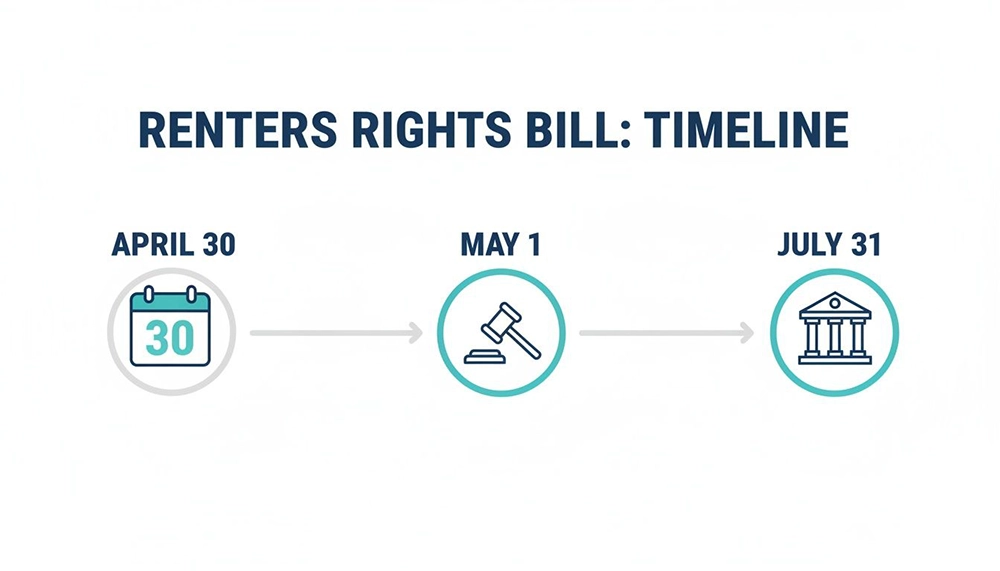
The key date to circle in your calendar is 30 April 2026. After this point, no new Section 21 notices can be served. If a notice was served before then, any legal action has to be started by the end of July 2026. It's a hard stop.
This deadline is almost certain to cause a ripple effect in the market. We're expecting to see a spike in eviction notices in the first few months of 2026, as some landlords rush to use Section 21 while they still can. Industry experts believe this will happen because after the ban, every eviction will have to rely on proving Section 8 grounds, a process that could get bogged down in already-stretched court systems. You can find out more about the 2026 market predictions and the impact on landlords.
New Responsibilities for Landlords and HMO Managers

This renters' rights bill update isn't just a minor tweak; it's bringing in some big new obligations for landlords and HMO managers. The main goal here is to professionalise the rental sector, making things more transparent for everyone involved. If you're a landlord, staying on the right side of these changes means getting your head around a few key duties that will reshape how you manage your properties.
At the heart of it all is the new mandatory Property Portal. It’s easy to see this as just more red tape, but it’s better to think of it as a central, digital filing cabinet for every privately rented home in the country.
Under the new system, every landlord will have to register themselves and their properties on this single, nationwide database. This is a straightforward move to give tenants a clear way to check their landlord is legitimate and compliant, while also helping local councils pinpoint and tackle rogue operators more effectively.
Introducing the Property Portal and Ombudsman
Working alongside the portal is the new Private Rented Sector Ombudsman. This independent body is set to be a game-changer for sorting out disagreements. It offers a fair and impartial service to settle disputes between landlords and tenants, removing the need for the stress and heavy cost of going to court.
Membership will be compulsory for all private landlords. The Ombudsman creates a clear path for resolving common issues like property standards or deposit disagreements, making sure both sides get a binding and unbiased decision. The whole point is to make the sector fairer and more efficient.
For property owners, this means a more proactive approach is needed. Getting your house in order now will make the transition much smoother. If you're looking to streamline your advertising and find great tenants, you can register as a landlord with us today to start connecting with people looking for a room.
Changes to Rent Increases and Pet Policies
The bill also brings in much clearer, fairer rules on two of the biggest sore points in any tenancy: rent hikes and pets. These updates are designed to make interactions more predictable and reasonable for both sides.
Here’s a quick rundown of what to prepare for:
- Regulated Rent Rises: Landlords will only be allowed to increase rent once per year and must give tenants two months' notice of any change. This puts an end to the tactic of pricing tenants out of their homes with sudden, unaffordable increases.
- A Fairer Approach to Pets: Tenants will now have the legal right to request a pet in their home, a request that landlords cannot unreasonably refuse. However, a landlord can require the tenant to take out pet insurance to cover any potential damage.
This isn't about forcing landlords to accept every single pet request. It's about changing the default answer from a hard "no" to a reasonable consideration of the tenant's situation and whether the property is suitable.
For HMO managers, knowing how to properly assess properties is as vital as ever, especially as regulations evolve. Keeping up with best practices for evaluating HMO investments will be crucial for navigating these changes. At the end of the day, these new responsibilities are all about building more trust and stability in the rental market.
How the Decent Homes Standard Impacts Your Property
The Renters' Rights Bill is about more than just contracts and evictions; it’s set to fundamentally raise the bar for the physical condition of rental homes. For the very first time, the Decent Homes Standard is being rolled out across the entire private rented sector (PRS).
This is a massive shift. Previously, this standard was a benchmark just for social housing. Now, it's being applied everywhere to make sure every tenant has a safe, warm, and genuinely liveable home.
So, what does a 'decent' home actually look like? This isn't about insisting on luxury fittings or high-end appliances. It’s about ensuring a property meets a reasonable, modern standard and is free from any serious health and safety hazards.
Think of it as a property MOT. It’s a checklist of essential requirements that make a property legally 'roadworthy' – or in this case, rentable. This new standard gets right to the core elements that make a house a proper home.
The Four Pillars of a Decent Home
To meet the standard, a property has to satisfy four key criteria. It must:
- Be free from Category 1 hazards. This targets the most severe risks, like exposed wiring, a dodgy boiler, or persistent, dangerous mould.
- Be in a reasonable state of repair. Tenants should be able to rely on functional fixtures and fittings. This means no collapsing ceilings, rotten floorboards, or broken steps.
- Have reasonably modern facilities. Kitchens and bathrooms need to be fit for purpose. This covers having adequate space and a functional layout, along with essentials like hot and cold running water.
- Provide a reasonable degree of thermal comfort. The property must have effective insulation and efficient heating, so tenants can keep their homes warm without facing crippling energy bills.
A major driver behind these changes is the tragic case that led to 'Awaab's Law'. This will legally force landlords to investigate and fix serious hazards like damp and mould within strict, non-negotiable timeframes. It places a clear legal duty on property owners to act decisively when a tenant’s health is at risk.
For landlords, meeting these standards shouldn't be seen as just another burden. A well-maintained, warm, and safe property attracts better tenants, slashes void periods, and protects the long-term value of your investment. It’s simply a smarter way to run a sustainable rental business.
Gearing Up for Compliance and Energy Efficiency
Alongside the Decent Homes Standard, big changes are coming for energy efficiency. The Renters' Rights Act is on track to introduce a minimum Energy Performance Certificate (EPC) C rating for all PRS properties by 2030.
With over a quarter of private rentals currently rated D or below, this is going to require significant investment from many landlords. The changes are expected to start from 1 May 2026, when PRS homes must meet the new standards, giving councils fresh powers to inspect properties and enforce fixes. You can learn more about the implementation roadmap and energy efficiency targets on benhams.com.
The best advice? Start planning now. Leaving it until the last minute will inevitably lead to a scramble for tradespeople and escalating costs. The smart move is to assess your property's current condition and EPC rating today, identify what upgrades are needed, and start budgeting for the improvements well ahead of the deadlines. This will ensure you stay compliant and your property remains a desirable asset in a much more regulated market.
Your Landlord Compliance Checklist
To help you get ahead, here’s a practical checklist to guide your preparations for the upcoming reforms. Thinking about these points now will save you a lot of stress and expense down the line.
| Action Item | Why It's Important | Recommended Timeline |
|---|---|---|
| Schedule a Property Health Check | Get a professional assessment against the Decent Homes Standard. Identify any Category 1 hazards or areas needing repair. | Within 6 months |
| Review Your EPC Certificate | Check your current EPC rating. If it's D or below, get quotes for insulation, heating upgrades, or double glazing. | Within 6-12 months |
| Budget for Upgrades | Set aside a realistic budget for any necessary works to meet both the Decent Homes and EPC C standards. | Within 12 months |
| Review Tenancy Agreements | Ensure your current agreements and processes align with new tenant rights, especially around repairs and maintenance reporting. | Ongoing |
| Check Your Insurance | Confirm your landlord insurance covers the property for its updated value and for any periods of renovation work. | Annually |
Working through this list proactively will put you in a strong position. It’s about shifting from a reactive mindset to a forward-thinking strategy that protects your investment and ensures you remain a reputable, compliant landlord for years to come.
What the New Bill Means for Tenants
For years, renting has often felt like walking a tightrope. This new bill isn't just a minor tweak to the rules; it's a fundamental shift designed to give you, the tenant, a solid ground to stand on. It puts more control and much-needed stability directly into your hands.
The biggest game-changer is the end of ‘no-fault’ Section 21 evictions. For too long, this has created a culture of fear, where tenants might think twice about reporting a leaky radiator or a broken fence, worried they could be asked to leave for no reason.
With that threat gone, you can confidently raise issues and request necessary repairs, knowing your home is secure as long as you uphold your side of the agreement. This is about more than just avoiding eviction—it’s about having the confidence to turn the place you rent into a genuine home.
Gaining Flexibility and Stability
The move away from rigid, fixed-term contracts to more fluid periodic tenancies strikes a brand-new balance. You're no longer locked into a 12-month agreement if your life takes an unexpected turn.
Instead, you can simply give two months’ notice to leave whenever your circumstances change. This flexibility is crucial for modern life, whether you’re relocating for a dream job, moving to be closer to family, or just ready for a new chapter.
Of course, even with this improved security, life happens and people still need to move. When that time comes, using a detailed moving house checklist can make the entire process feel a lot less chaotic.
This change really offers the best of both worlds: the stability to put down roots for as long as you like, and the freedom to move on when you need to. It’s a recognition that your home should be a source of comfort, not a cause of uncertainty.
New Rights and Fairer Resolutions
This bill also introduces some powerful new rights to improve your day-to-day life and ensure that when disagreements happen, they're resolved fairly. The goal is to make renting more transparent and your relationship with your landlord more balanced.
Here’s a quick rundown of the key benefits coming your way:
- The Right to Request a Pet: Gone are the days of blanket "no pets" clauses in tenancy agreements. You’ll now have the legal right to ask to keep a pet, and your landlord can’t unreasonably say no.
- Access to a Free Ombudsman: If you have a dispute over things like repairs or getting your deposit back, you’ll have access to a new, impartial Ombudsman. This provides a free and fair way to sort out conflicts without the stress and cost of going to court.
- A Transparent Landlord Portal: The new national Property Portal will let you look up your landlord to check they are legitimate and compliant. This adds a vital layer of transparency, helping you steer clear of rogue operators.
These protections are all about giving you the confidence you deserve. If you're currently looking for a place to live, you can register as a tenant with us to get alerts for rooms that fit what you're searching for. The new system is built to give you peace of mind.
Frequently Asked Questions About the Renters Rights Bill
Navigating new legislation always throws up a few questions for both landlords and tenants. This new bill is certainly no exception. To help you get clear on what matters, we’ve put together answers to some of the most common queries we’re hearing.
When Does the Renters Rights Bill Actually Come Into Effect?
The big date for your diary is 1 May 2026. From this day, the ban on Section 21 'no-fault' evictions will officially apply to all new tenancies. If a tenancy starts on or after this date, it falls under the new rules from day one.
For any existing tenancies, the new system will be phased in later, on a date the government has yet to confirm. But the cut-off is firm: landlords have until 30 April 2026 to serve any final Section 21 notices. After that, the door on no-fault evictions closes for good. Other key parts of the bill, like the new Property Portal and Ombudsman, are expected to be rolled out after this initial date.
Can I Still Evict a Tenant for Not Paying Rent?
Yes, absolutely. There's a common myth that the bill strips landlords of their power to evict, but that simply isn't true. In fact, the new rules are designed to make it easier for a landlord to regain their property when there's a legitimate reason, such as serious rent arrears.
The legislation is beefing up the grounds under Section 8. For instance, it will be more straightforward for landlords to act if a tenant has repeatedly fallen into at least two months of arrears over a three-year period. The aim is to tackle problem tenants decisively while giving responsible tenants the security they deserve.
The core principle here is fairness. Landlords keep the right to protect their investment from tenants who don't pay. Good tenants, meanwhile, are protected from being uprooted for no reason. This is all about rebalancing the system, not taking away landlords' rights.
How Do I Request to Keep a Pet in My Rental Property?
The new bill gives tenants a legal right to ask to keep a pet. You’ll need to make this request formally, in writing, to your landlord. Once they have your request, they have 42 days to give you an answer.
A landlord can't just say no without a good reason. If they refuse, they must provide a valid justification in writing—for example, if the property is obviously unsuitable because of its size or has no outdoor space. It’s also worth knowing that landlords can require you to take out specific pet insurance to cover any potential damages.
Do These New Rules Apply to Homeowners with a Lodger?
Generally, no. The Renters Rights Bill is focused on tenants holding an Assured Shorthold Tenancy (AST), which is the standard agreement for most private rentals. If you're a live-in landlord renting a room to a lodger, you'll be using a different setup called a 'licence to occupy'.
Because of that legal distinction, the major changes—like the end of Section 21—won’t apply to lodger agreements in the same way. That said, some elements of the bill, like the general push for better property standards, could have a ripple effect across the entire rental market. For a deeper dive into rental market trends and news, you can find more insights on our Rooms For Let blog.
At Rooms For Let, we are committed to helping landlords, HMO managers, and homeowners navigate the rental market with confidence. Whether you're advertising a spare room or looking for your next tenant, our platform is designed to make the process simple and effective. Find out how we can help you let your room quickly.