The UK rental market is in the middle of its biggest shake-up in a generation, and the Renters (Reform) Bill is right at the heart of it. Landlords are affected whetrher they rent a whole property or a spare room in a HMO. These massive renters rights bill updates are all about creating a rental landscape that’s fairer and more secure for everyone involved—tenants and landlords alike. The headline news? Scrapping 'no-fault' evictions and bringing in a raft of new standards.
What the Renters Reform Bill Means for You

Think of the Renters (Reform) Bill as a fundamental reset of UK housing law. For years, the system has often felt skewed, and this legislation is the government's answer to levelling the playing field. The core idea is to give tenants the stability they've been asking for, while still making sure landlords have the power to manage their properties properly and deal with genuine problems like rent arrears or anti-social behaviour.
This bill didn't just appear out of nowhere; it’s a direct response to a rental market under serious strain. The competition for homes has become intense, with some reports showing as many as 17 households fighting for every single available rental property. The legislation aims to tackle the knock-on effects, like unpredictable rent hikes, by giving tenants a greater sense of long-term security.
Key Changes You Need to Know
Whether you're a landlord, a tenant, or managing an HMO, getting your head around the practical impact of these changes is essential. The Bill is set to completely reshape tenancy agreements, the eviction process, and how disputes are settled.
To give you a clearer picture, here’s a quick rundown of the most significant updates being introduced.
Key Renters Rights Bill Updates at a Glance
| Area of Change | What's New for Landlords and Tenants |
|---|---|
| Eviction Process | The biggest change: Section 21 'no-fault' evictions are being abolished. Landlords will now need a specific, valid reason to regain possession. |
| Landlord Grounds | To balance this, Section 8 grounds are being strengthened, giving landlords more robust options for dealing with rent arrears or anti-social tenants. |
| Dispute Resolution | A new, mandatory Property Ombudsman will be created. This is designed to be a faster, cheaper alternative to the courts for settling disputes. |
| Compliance & Transparency | A new digital Property Portal is being introduced. Landlords must register themselves and their properties, making it easier for councils to enforce standards. |
As you can see, these aren't minor tweaks. They demand a fresh approach to managing properties and tenancies. For landlords advertising on platforms like Rooms For Let, staying on top of these rules is the only way to stay compliant and build the kind of positive relationships that make for a stress-free let.
If you need more practical advice, we're constantly updating our landlord resources section to help you navigate the new landscape.
The Big One: Saying Goodbye to Section 21 Evictions
Without a doubt, the most talked-about part of the new renters' rights bill is the end of Section 21, what everyone knows as the 'no-fault' eviction. This isn't just a minor tweak; it's a fundamental shift in the private rental market, reshaping the entire relationship between landlords and tenants in the UK.
For tenants, it spells the end of the constant uncertainty. The days of a tenancy being ended for no specific, legally valid reason are over. This change is designed to give renters the stability they’ve been missing, empowering them to flag poor conditions or challenge an unfair rent hike without the dread of a retaliatory eviction notice landing on their doormat.
A New Era of Rolling Tenancies
So, how does this actually work? The bill gets rid of fixed-term contracts, like the standard 12-month agreement we're all used to. In their place, all new tenancies will become periodic tenancies right from the start.
Think of it as a rolling contract with no fixed end date. The tenancy simply continues month by month until the tenant decides to give notice, or the landlord has a legitimate, legally recognised reason to end it. It’s a more flexible and secure system for renters, but it also means landlords need to adjust their strategy, focusing on building good, long-term relationships instead of just waiting for a fixed term to expire.
What Replaces Section 21? A Stronger Section 8
Getting rid of Section 21 doesn't leave landlords powerless. To create a fair balance, the bill significantly beefs up the existing Section 8 grounds for possession. This isn't about creating sneaky loopholes; it’s about making sure landlords have clear, fair routes to get their property back when they genuinely need to.
Some of the key strengthened grounds include:
- Selling the Property: If you genuinely plan to sell your rental property, there will be a straightforward process to regain possession.
- Moving In: Landlords who need to move back into the property themselves, or have a close family member who needs to, will have a valid reason to end a tenancy.
- Serious Rent Arrears: The rules for evicting tenants who are repeatedly and significantly behind on rent have been made more robust, making it easier for landlords to take action.
The Renters' Rights Act 2025 is the biggest shake-up of the private rented sector since the Housing Act 1988, driven largely by the move to scrap 'no-fault' evictions. This is already having a ripple effect, with data from 2024 showing that 15% of homes put up for sale were previously rental properties. You can read more about this trend on the Cushman & Wakefield website.
More Than Just Evictions: New Rules for a Fairer Market
The updates go far beyond the eviction process. One of the most important new additions is the mandatory Private Rented Sector Ombudsman. This will be an independent body set up to settle disputes, offering a binding decision that's much faster and cheaper than dragging things through the courts.
On top of that, tenants will get the legal right to ask to keep a pet, a request landlords won't be able to unreasonably refuse. The rules around rent increases are also being tightened to make them more predictable and fair. For landlords, all these changes mean that being transparent, organised, and communicative is no longer just good practice—it's essential.
The Bill's Journey and Implementation Timeline
Understanding what the renters’ rights bill updates contain is one thing, but knowing when they actually kick in is a different beast altogether. Big changes to the law don't happen overnight. They have to make a journey through Parliament, getting debated, amended, and approved before they can become official. The Renters (Reform) Bill is on that exact path right now.
This whole process is there for a reason – it ensures every detail is properly scrutinised before it impacts the UK's 11 million private renters and the landlords who house them. For anyone managing property, this timeline isn't just a political curiosity. It's your roadmap for getting ready. It tells you when you'll need to start thinking about new tenancy agreements, tweaking your processes, and letting your tenants know what's coming.
The visual below maps out the key stages, from the moment the Bill was introduced to the phased rollout of its new rules.
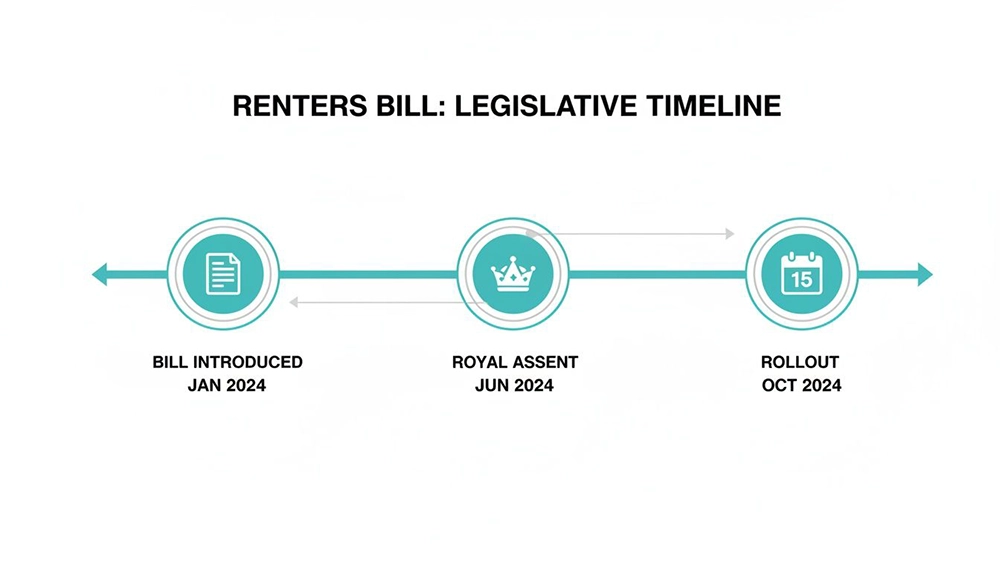
This gives you a bird's-eye view of how a proposal slowly but surely becomes an enforceable Act, moving us all towards a reformed rental market.
A Phased Rollout Explained
One of the biggest questions we hear is how these new rules will actually be switched on. To avoid chaos, the government is planning a two-stage rollout, giving everyone in the industry a chance to adapt without panic.
Here’s a simple breakdown of how it's expected to work:
Phase 1: New Tenancies First. The big changes, like scrapping Section 21 and shifting to rolling periodic tenancies, will first apply to all new tenancies that begin on or after a specific "first implementation date."
Phase 2: Existing Tenancies Follow. A bit later on, all existing tenancies will be brought into the new system. This will happen on a "second implementation date," giving landlords a clear window to get their house in order for current agreements.
Think of it this way: landlords have two distinct deadlines to worry about, one for new lets and another for their current ones. It's absolutely crucial to get these dates in your diary once they are confirmed. Getting caught out could lead to some pretty hefty financial penalties.
The best advice is to keep a close eye on official government announcements for the final dates. For ongoing analysis and practical tips on navigating these changes, you can always find the latest articles on the Rooms For Let blog. This is a journey of adaptation, and being prepared is your best defence.
How the New Rules Impact Landlords, Tenants, and Lodgers
The latest updates to renters’ rights aren't a simple, one-size-fits-all change. Instead, they create a new dynamic, shifting the rights and responsibilities for everyone involved in a rental agreement. Whether you're a landlord, tenant, or even a lodger, getting to grips with what this means for you is key to navigating the new landscape smoothly.
Landlords: A New Focus on Evidence
For landlords, this bill marks a significant shift in mindset. With Section 21 'no-fault' evictions off the table, the focus swings entirely towards the strengthened Section 8 grounds for possession. This means building a robust, evidence-based case is now the only way forward.
Meticulous record-keeping is no longer just good practice—it's now the most critical tool in your property management kit. Document everything, from tenant communications and inspection reports to records of late rent payments. A clear paper trail is your best defence if you ever need to regain possession for legitimate reasons like anti-social behaviour or significant rent arrears.
Tenants: A New Chapter of Security
For tenants, the bill brings a welcome era of enhanced security and stability. The end of 'no-fault' evictions means you can finally put down roots, free from the constant worry of being asked to leave without a valid reason. It’s a change that empowers you to treat your rental as a genuine home.
This newfound security also gives you the confidence to raise issues about repairs or property standards without the fear of a retaliatory eviction. It even makes it easier to personalise your space. While you'll still need permission for major changes, you can feel more comfortable making your rental feel like your own. For anyone looking for temporary decorating ideas, our guide on removable wallpaper options for renters has some great tips.
The core principle is simple: as long as you stick to your tenancy agreement—paying rent on time and looking after the property—you can expect to stay in your home long-term. This gives you more leverage in any disputes and a much stronger voice in your living situation.
HMOs and Lodgers: Understanding the Exceptions
Operators of Houses in Multiple Occupation (HMOs) face a unique set of challenges. As all tenancies are set to become periodic (rolling contracts), managing a property with multiple, separate tenancies will demand excellent organisation. Staggered tenancy start dates and handling individual tenant issues under the new Section 8 rules will require a far more hands-on approach.
But what about resident landlords who just rent out a spare room? It’s crucial to understand that most of these major changes do not apply to you and your lodger.
Lodger agreements are not Assured Shorthold Tenancies, which is what this bill primarily reforms. This means that as a live-in landlord, you are largely exempt from the abolition of Section 21. You can continue to use the established 'reasonable notice' process to end a lodging agreement, which provides vital flexibility when sharing your own home. That said, having a clear, written lodger agreement is still the best way to protect everyone and ensure the arrangement is understood from day one.
Impact on Landlords vs Tenants vs Lodgers
To make things clearer, let's break down exactly how the new bill affects each group in the rental market.
| Group | Key Impact and Responsibilities |
|---|---|
| Landlords | Can no longer use 'no-fault' Section 21 evictions. Must now rely on strengthened Section 8 grounds, requiring solid evidence for possession (e.g., rent arrears, anti-social behaviour). Meticulous record-keeping is now essential. |
| Tenants | Gain significantly more security. Cannot be evicted without a valid reason, allowing them to settle into their homes long-term and raise issues without fear of reprisal. All tenancies will eventually become periodic (rolling). |
| Lodgers | Largely unaffected by the core changes. As lodgers do not have Assured Shorthold Tenancies, live-in landlords can still provide 'reasonable notice' to end the agreement. The abolition of Section 21 does not apply. |
As you can see, while the headlines focus on the end of 'no-fault' evictions for tenants, the practical impact varies hugely depending on your role. Live-in landlords retain their flexibility, while portfolio landlords will need to adapt their processes significantly.
Your Practical Checklist for Compliance

Knowing about the latest renters rights bill updates is one thing, but acting on them is what really matters. To stay on the right side of the law and protect your investment, you need a clear, practical plan. This checklist breaks down what you need to do into straightforward steps, helping you adapt with confidence.
With Section 21 on its way out, your entire approach to tenant management has to change. The new focus is all on meticulous documentation and proactive communication. Every single interaction, from the first application to day-to-day management, is a chance to build a solid, evidence-based file for each tenancy.
Review Your Tenancy Agreements
First on the list, and arguably the most crucial task, is to overhaul your tenancy agreements. The shift to a universal system of periodic tenancies means your current fixed-term contracts will soon be redundant for any new lets.
- Remove Fixed-Term Clauses: Your new agreements need to reflect the new reality of rolling, periodic tenancies right from day one.
- Update Possession Grounds: Make sure your clauses align with the strengthened Section 8 grounds. While it isn't strictly necessary to list them, doing so can help manage your tenant's expectations from the start.
- Incorporate Pet Policies: You need a clear policy for handling pet requests. A blanket "no pets" ban is no longer an option, so you'll need a fair and reasonable process for assessing each request.
Strengthen Your Vetting and Record-Keeping
Without the safety net of 'no-fault' evictions, your best line of defence is a rock-solid tenant screening process. Your ability to regain possession will now hang on your ability to prove a breach of the tenancy agreement, making comprehensive records completely non-negotiable.
Think of your record-keeping as your property's insurance policy. A detailed file with communications, inspection reports, and rent payment logs is your primary tool for proving legitimate grounds for possession under the updated Section 8.
Document absolutely everything. Keep a clear digital or paper trail of all rent payments, maintenance requests, and important conversations. This evidence will be vital if a dispute crops up or you need to approach the new Property Ombudsman. For extra peace of mind, it’s also a good idea to explore comprehensive landlord insurance options that can offer protection against things like extended vacancies or unexpected legal costs.
Prepare for New Digital Platforms
The bill is bringing in two major digital requirements that will become mandatory for all landlords in the private rented sector. Getting ahead of these changes now will save you a world of stress and potential fines down the line.
- The Property Portal: Start gathering all the necessary documents for yourself and your properties now. Even though registration isn't open yet, having everything ready to go will make the process seamless once the portal launches.
- The Property Ombudsman: Get familiar with the idea of alternative dispute resolution. The Ombudsman will be the first port of call for many tenant complaints, and understanding how it operates will help you resolve issues efficiently without having to go to court.
Handling Common Scenarios Under New Rules
Your day-to-day management will need to adapt as well. For instance, when a tenant asks to keep a pet, your response has to be timely and justifiable. You can only refuse if you have a very good reason, like the property being completely unsuitable for that specific animal. You can, however, require the tenant to take out pet insurance to cover potential damages, which is a perfectly reasonable condition to impose. By thinking through these scenarios now, you can ensure every action you take is fully compliant with the new legal framework.
Giving the New Rules Some Teeth: Penalties and Enforcement
With new rights come new responsibilities, and the latest bill isn't just a list of suggestions. It’s backed by a much stronger enforcement framework designed to make sure everyone plays by the rules. Think of it as finally giving the legislation some real teeth.
The old system was often criticised for being a bit of a postcode lottery, but these changes are all about creating clear, unavoidable consequences for breaking the law. For landlords and advertisers on platforms like Rooms For Let, getting your head around this new penalty structure is fundamental to staying on the right side of the law. The bill gives local authorities much more power to issue civil penalties, meaning they can take swift action without getting bogged down in lengthy court battles.
Tougher Financial Penalties
Let's be blunt: the financial stakes are now much higher. The Renters' Rights Act 2025 has brought in a tiered system of civil penalties, and they’re not messing about. Fines have shot up to £7,000 for first-time or minor slip-ups, but can climb to a hefty £40,000 for serious or repeated offences.
Perhaps most importantly, illegal evictions can now be punished with these civil penalties for the first time—a massive shift in UK housing law. You can find more detail on this new framework over on the Goodlord blog. This tiered system makes sure the punishment fits the crime, from a simple administrative error right up to actions that put a tenant’s safety at risk.
The New Ombudsman: A Referee for the Sector
It’s not just about fines. The bill also creates a brand-new, mandatory Private Rented Sector (PRS) Landlord Ombudsman. This independent body is there to sort out disputes, offering a much faster and cheaper alternative to going through the courts for both landlords and tenants.
The Ombudsman's role is to be a neutral referee. Its decisions will be legally binding, and it will have the authority to order landlords to take specific actions, pay compensation, or issue an apology.
This is a cornerstone of the new system. By 2028, every single private landlord in the country will have to be a member. This creates a universal standard of accountability and gives tenants a clear, straightforward path for getting things sorted when they go wrong.
Got Questions About the Renters Reform Bill?
It’s completely normal to have questions when new legislation comes along. Let's break down some of the most common queries we're hearing from landlords and tenants about the upcoming changes.
Can I Still Evict a Tenant for Not Paying Rent?
Yes, absolutely. In fact, in some ways, the Bill is designed to make this process more straightforward.
The government is strengthening a landlord’s ability to act on rent arrears. The updated Section 8 grounds are intended to give landlords a clearer path to regaining their property when tenants genuinely haven't paid their rent, ensuring you can still protect your investment.
Do These New Rules Affect My Current Tenancy Agreement?
Not immediately, no. The changes won't happen overnight.
The plan is to introduce the new laws in stages, giving everyone time to get up to speed. First, they will apply to all new tenancies from a specific date. Existing agreements will transition over to the new system later on, so there will be plenty of notice.
What Is This Property Portal I Keep Hearing About?
The Property Portal is a new digital database where every private landlord in England will need to register themselves and their properties.
Think of it as a central hub for the private rented sector. Registration will be mandatory for everyone. The aim is to increase transparency, help local councils enforce standards, and give tenants a reliable place to check that their landlord is compliant with the law.
How Does the Bill Affect Me If I Just Rent a Room?
If you're a resident landlord who lives in the property and shares facilities like a kitchen or bathroom with your lodger, then most of these reforms won't apply to you.
Lodger agreements are specifically excluded from the tenancy framework that this bill overhauls. This means the current, more flexible arrangement of providing 'reasonable notice' will still apply.
Now more than ever, finding the right person to share your home with is key. With Rooms For Let, you can advertise your spare room, HMO, or flatshare to thousands of active seekers across the UK. List your room for free today and connect with your next great tenant.